

By Hazel Sloane
Discover the perfect German Shepherd diet: how to balance homemade meals and premium store-bought food for a healthy, happy GSD who thrives at every life stage.
I’ve always believed that food shapes health, behavior, and even the bond we share with our dogs. For German Shepherds, nutrition matters more than most breeds — their size, energy levels, and sensitive digestive systems make diet a real game-changer.
When I first brought home my German Shepherd, Max, I made the mistake so many new owners make: I assumed that any premium dog food would be good enough. Within a few weeks, I noticed his coat looked dull, he had occasional digestive upset, and his energy seemed inconsistent.
That’s when I started really digging into GSD nutrition—not just what the bag claimed, but what these dogs actually need to thrive. Over the years, I’ve fed my GSDs a mix of high-quality kibble, occasional wet food, and fresh homemade meals when time allows.
The trick isn’t choosing one approach over the other. It’s finding a smart balance that keeps your Shepherd healthy, satisfied, and performing at their best—whether they’re a working dog, a family companion, or somewhere in between.
Here’s everything I’ve learned about feeding German Shepherds the right way.

Why German Shepherds Need a Special Diet
German Shepherds aren’t just big dogs—they’re athletic, high-energy working breeds with specific nutritional requirements that generic dog food doesn’t always address.
They’re Large and Muscular
An adult German Shepherd typically weighs between 50-90 pounds, with males on the heavier end. That’s a lot of muscle mass to maintain, and muscle requires high-quality protein to stay strong and functional.
What this means for diet:
Your GSD needs a protein-rich diet with quality sources like chicken, beef, lamb, or fish. Look for foods where real meat. Not meat meal or by-products must be the first ingredient.
They’re Prone to Joint Issues
Hip dysplasia, elbow dysplasia, and arthritis are unfortunately common in German Shepherds. These conditions are partly genetic, but nutrition plays a significant role in joint health throughout their lives.
What this means for diet:
Foods fortified with Glucosamine, Chondroitin, and Omega-3 fatty acids support joint health. Maintaining a healthy weight is also critical—extra pounds put unnecessary strain on already vulnerable joints.
They Have Sensitive Stomachs
Many German Shepherds have touchy digestive systems. Sudden diet changes, low-quality ingredients, or too much fat can trigger gas, diarrhea, or vomiting.
What this means for diet:
Consistency is key. Introduce new foods gradually over 7-10 days. Choose foods with easily digestible proteins and avoid common fillers like corn, wheat, and soy that can irritate sensitive stomachs.
They Burn Energy Fast
German Shepherds are working dogs bred for stamina and endurance. Even family-pet GSDs retain that high-energy drive and need fuel to support it.
What this means for diet:
Your GSD needs a diet rich in healthy fats for sustained energy. Look for foods with moderate to high fat content (12-18%) and quality carbohydrates for energy.
Visible Signs of Good Nutrition
When your German Shepherd’s diet is dialed in, you’ll see it:
- Shiny, thick coat with minimal excessive shedding
- Healthy skin without dryness, flakiness, or hot spots
- Consistent energy throughout the day
- Healthy weight with visible waist and easily felt ribs
- Solid, regular stools (not too soft, not too hard)
- Bright eyes and alert expression
If you’ve ever noticed dull fur, flaky skin, or excessive shedding—that’s often a nutrition issue, not just a grooming problem. Getting the food balance right can literally transform how your dog looks and feels.
how your dog looks and feels.rely solely on homemade meals without checking the nutritional balance first.

Commercial Food vs. Homemade Meals — The Pros and Cons
The great debate: should you feed kibble, make homemade meals, or do a combination of both? Let’s break down the honest pros and cons of each approach.
Commercial Dog Food (Kibble & Wet Food)
Pros:
Convenience — Open the bag, measure, pour. Done. No prep time, no cooking, minimal cleanup.
Nutritionally complete — Quality commercial foods are formulated by veterinary nutritionists to meet AAFCO (Association of American Feed Control Officials) standards. All essential vitamins, minerals, and nutrients are included.
Shelf-stable — Kibble lasts for months when stored properly. You can buy in bulk and not worry about spoilage.
Cost-effective — Even premium kibble is typically cheaper per meal than homemade food when you factor in quality ingredients and supplements.
Dental benefits — The mechanical action of chewing kibble can help reduce tartar buildup (though it’s not a replacement for proper dental care).
Cons:
Quality varies dramatically — Not all kibble is created equal. Budget brands often use low-quality proteins, fillers, and artificial additives.
Processing concerns — High-heat processing can reduce nutritional value. Some nutrients are added back synthetically after cooking.
Potential allergens — Common ingredients like chicken, beef, and grains can trigger allergies in sensitive GSDs.
Less appealing — Some picky eaters find kibble boring, especially if they’ve tasted fresh food.
Hazel’s Kibble Philosophy:
I use premium kibble as the foundation of my GSDs’ diet. It gives me peace of mind knowing they’re getting complete nutrition even on my busiest days. But I’m picky about brands—I look for real meat as the first ingredient, no corn or wheat, and added joint support.
Homemade Meals
Pros:
Total ingredient control — You know exactly what’s going into your dog’s body. No mystery meat, no questionable additives.
Great for food allergies — If your GSD has sensitivities, homemade meals let you eliminate triggers completely.
Freshness — There’s something satisfying about feeding your dog real, whole foods instead of processed kibble.
Variety — You can rotate proteins, vegetables, and grains to keep meals interesting and nutritionally diverse.
Increased palatability — Even picky eaters usually devour fresh, home-cooked meals.
Cons:
Time-consuming — Cooking, portioning, and storing homemade meals takes real effort. It’s not realistic for everyone’s lifestyle.
Risk of nutritional imbalance — Unless you’re following vet-approved recipes with proper supplementation, homemade diets can lack essential vitamins and minerals—especially calcium, vitamin D, and certain amino acids.
Higher cost — Quality proteins, fresh vegetables, and necessary supplements add up quickly.
No long-term storage — Homemade meals need refrigeration or freezing. You’re constantly prepping and planning.
Potential for mistakes — Well-meaning owners sometimes include toxic ingredients (onions, garlic, grapes) or don’t supplement properly, leading to serious health issues.
Hazel’s Homemade Philosophy:
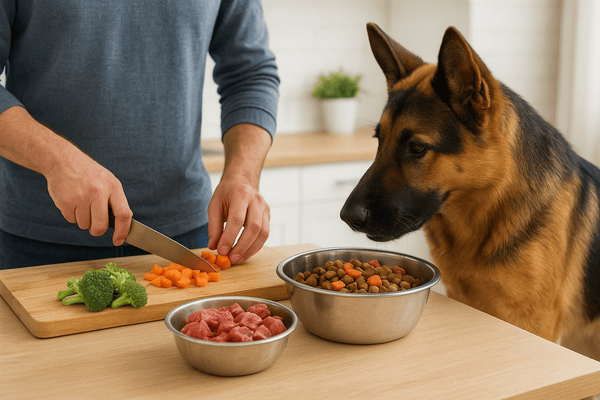
I love preparing fresh meals for my GSDs, but I don’t do it exclusively. I cook in batches on weekends—simple combinations like boiled chicken, brown rice, sweet potatoes, and green beans. I always add a vet-recommended supplement to ensure they’re getting calcium, vitamins, and omega-3s. Never rely solely on homemade meals without professional guidance on nutritional balance.
How to Safely Balance Homemade and Store-Bought Meals
This is where the magic happens—combining the convenience and completeness of commercial food with the freshness and variety of homemade meals.
The Foundation Principle
Store-bought food (kibble) should be your base — It ensures your GSD gets complete, balanced nutrition every single day, no matter what else happens.
Homemade meals add variety and freshness — They’re the “bonus” that keeps meals interesting, provides fresh whole foods, and lets you customize for your dog’s preferences or needs.
The 80/20 Rule (Or Adjust to Your Lifestyle)
A good starting point is:
- 80% commercial food, 20% homemade — Most meals are kibble; homemade meals 2-3 times per week
- 70/30 split — If you love cooking and have time, increase homemade to 3-4 meals per week
- 90/10 split — If time is tight, even one fresh meal per week adds value
What works for me:
I aim for 3 homemade dinners per week with kibble breakfasts. This gives my dogs variety without overwhelming my schedule or risking nutritional gaps.
Sample Balanced Weekly Feeding Plan
Here’s the exact routine I use and recommend for most German Shepherd owners:
Monday:
- Breakfast: Kibble
- Dinner: Kibble
Tuesday:
- Breakfast: Kibble
- Dinner: Homemade meal (boiled chicken, brown rice, steamed carrots and green beans, fish oil supplement)
Wednesday:
- Breakfast: Kibble
- Dinner: Kibble
Thursday:
- Breakfast: Kibble
- Dinner: Kibble with wet food topper (adds moisture and flavor)
Friday:
- Breakfast: Kibble
- Dinner: Homemade meal (lean ground beef, sweet potato, broccoli, canine multivitamin)
Saturday (Treat Day):
- Breakfast: Kibble
- Dinner: Kibble
- Bonus: A few training treats, a bully stick, or a frozen Kong—but keep treats under 10% of daily calories
Sunday (Meal Prep Day):
- Breakfast: Kibble
- Dinner: Kibble
- Afternoon: Batch-cook homemade meals for the week ahead, portion into containers, refrigerate or freeze
Why This Rotation Works
Consistency prevents upset stomachs — Your GSD’s digestive system gets used to the pattern.
Variety provides nutritional diversity — Different proteins and vegetables offer different vitamins, minerals, and phytonutrients.
You stay sane — Cooking 2-3 times per week is manageable. Cooking every single meal? That’s burnout waiting to happen.
Your dog stays excited about food — Fresh meals break up the monotony of kibble without making them turn their nose up at commercial food.
What to Include in Homemade Meals
If you’re going to cook for your German Shepherd, do it right. Here’s what should go into a balanced homemade meal:

Quality Protein (40-50% of the meal)
Good options:
- Chicken (breast, thighs—remove skin and bones)
- Turkey
- Lean beef (90% lean or higher)
- Lamb
- Fish (salmon, whitefish—fully cooked, no bones)
- Eggs (cooked)
Cook thoroughly — Never feed raw meat unless you’re following a professionally designed raw diet with proper safety protocols.
Complex Carbohydrates (30-40% of the meal)
Good options:
- Brown rice
- Sweet potatoes
- White potatoes (cooked, no green parts)
- Oatmeal
- Quinoa
Why carbs matter: They provide energy and fiber for digestive health.
Vegetables (10-20% of the meal)
Safe options:
- Carrots (raw or cooked)
- Green beans
- Broccoli (small amounts)
- Peas
- Spinach (cooked, small amounts)
- Pumpkin (plain, not pie filling)
Preparation: Steam or lightly cook vegetables for better digestibility.
Healthy Fats
Add a source of omega-3 fatty acids:
- Fish oil (liquid or capsule—follow dosing instructions)
- Flaxseed oil
- Small amount of coconut oil
Essential Supplements
This is non-negotiable. Homemade meals without supplementation will create deficiencies over time.
What you need:
- Calcium — Critical for bone health (ground eggshell, bone meal, or calcium carbonate supplement)
- Canine multivitamin — Fills nutritional gaps
- Joint support — Glucosamine and chondroitin (especially for GSDs)
Consult your vet or use a veterinary nutritionist-approved recipe to ensure proper ratios. Resources like BalanceIT.com can help you formulate complete recipes.

Foods to NEVER Feed Your German Shepherd
Some human foods are toxic to dogs. Keep these far away from your GSD:
Toxic foods:
- Chocolate (all types—dark chocolate is the most dangerous)
- Grapes and raisins (can cause sudden kidney failure)
- Onions and garlic (damages red blood cells)
- Avocado (contains persin, toxic to dogs)
- Xylitol (artificial sweetener—found in sugar-free gum, peanut butter, baked goods—EXTREMELY toxic)
- Macadamia nuts
- Alcohol (any amount)
- Coffee and caffeine
- Raw dough (expands in stomach, produces alcohol)
- Cooked bones (splinter and cause choking or internal damage)
Foods to limit or avoid:
- High-fat foods (can trigger pancreatitis)
- Salty foods (dehydration, sodium toxicity)
- Dairy (many dogs are lactose intolerant)
How to Transition Between Foods Safely
Whether you’re switching kibble brands or introducing homemade meals, always transition gradually to avoid digestive upset.
The 7-10 Day Transition Plan
Days 1-2: 75% old food, 25% new food
Days 3-4: 50% old food, 50% new food
Days 5-6: 25% old food, 75% new food
Days 7+: 100% new food
Watch for:
- Changes in stool consistency
- Vomiting or loss of appetite
- Increased gas
- Skin reactions (itching, hot spots)
If you see any of these, slow down the transition or consult your vet.
How to Portion Meals Correctly
Overfeeding and underfeeding are both common mistakes. Here’s how to get portions right for your German Shepherd.
Start with Feeding Guidelines
Check the back of your kibble bag—it will have a feeding chart based on your dog’s weight. This is your starting point, not your final answer.
Example:
A 70-pound adult GSD might need 3-4 cups of kibble per day, split into two meals.
Adjust Based on Activity Level
Couch potato GSD: Feed on the lower end of the range
Moderately active GSD: Feed middle of the range
Working dog or highly active GSD: Feed upper end or slightly above
Monitor Body Condition
Your GSD should have:
- A visible waist when viewed from above
- An abdominal tuck when viewed from the side
- Ribs that are easily felt but not visible
Too thin: Ribs, spine, and hip bones are visible
Too heavy: No waist, ribs difficult to feel, belly sags
Weigh your dog monthly and adjust portions up or down by 10-20% as needed.
Treat Calories Count
If your GSD gets a lot of training treats, bully sticks, or table scraps (which should be rare), reduce meal portions accordingly. Treats shouldn’t exceed 10% of daily caloric intake.
Hazel’s Portioning Tip:
I weigh Max monthly and take photos from above and the side. Visual tracking helps me catch weight changes before they become a problem.
Supplements Worth Considering
Even with balanced nutrition, certain supplements can benefit German Shepherds—especially as they age.
Joint Support (Essential for GSDs)
Glucosamine and chondroitin — Supports cartilage health and reduces joint inflammation
MSM — Natural anti-inflammatory
Start early — Don’t wait until your dog shows signs of joint issues. Prevention is easier than treatment.
Omega-3 Fatty Acids
Fish oil — Supports skin, coat, joint, and heart health
Dosage: Follow product guidelines or consult your vet
Quality matters: Look for fish oil specifically formulated for dogs with molecularly distilled purity
Probiotics
Supports digestive health — Especially helpful for GSDs with sensitive stomachs
Can improve nutrient absorption and boost immune function
Best given daily or a few times per week
Multivitamins
Fills nutritional gaps — Particularly useful if you’re feeding homemade meals
Choose canine-specific formulas — Human vitamins have different ratios and may contain harmful ingredients
When to skip supplements: If your dog eats a high-quality, complete commercial diet and shows no health issues, they may not need additional supplements beyond joint support. Always consult your vet before adding new supplements.
Common Feeding Mistakes German Shepherd Owners Make
Let’s talk about what NOT to do—mistakes I see constantly and made myself early on.
Mistake #1: Relying Only on Homemade Meals Without Professional Guidance
Even the most well-intentioned homemade diets can lack essential nutrients. Without proper supplementation, you risk serious deficiencies that won’t show up for months or years.
The fix: Use vet-approved recipes with proper supplementation, or make homemade meals a supplement to complete commercial food—not a replacement.
Mistake #2: Overfeeding Treats and Table Scraps
That sad face is powerful, I know. But too many treats lead to obesity, and obesity leads to joint problems, diabetes, and shortened lifespan.
The fix: Treats should be less than 10% of daily calories. Use small training treats (pea-sized), and count them toward daily food intake.
Mistake #3: Never Rotating Protein Sources
Feeding only chicken for years can lead to food sensitivities and nutritional imbalances.
The fix: Rotate proteins every few months—chicken, beef, lamb, fish. This provides nutritional diversity and reduces the risk of developing allergies.
Mistake #4: Ignoring Joint Supplements Until Problems Start
By the time your GSD shows signs of joint pain, damage has already occurred. Hip dysplasia is progressive.
The fix: Start glucosamine and fish oil supplementation by age 2, even if your dog seems perfectly healthy.
Mistake #5: Free-Feeding (Leaving Food Out All Day)
This makes it impossible to monitor appetite (an early sign of illness) and contributes to obesity.
The fix: Feed scheduled meals—typically twice daily for adult GSDs. Remove uneaten food after 15-20 minutes.
Mistake #6: Switching Foods Too Often or Too Quickly
Constantly changing brands or flavors can upset sensitive stomachs and make it hard to identify food sensitivities if they develop.
The fix: Find a quality food that works and stick with it. If you need to switch, transition gradually over 7-10 days.
Feeding German Shepherds at Different Life Stages
Nutritional needs change as your GSD grows from puppy to senior. Here’s how to adjust:
Puppies (8 Weeks – 12 Months)
Needs: High-quality puppy food formulated for large breeds
Why: Supports rapid growth while controlling growth rate (too-fast growth increases joint problems)
Frequency: 3-4 meals per day until 6 months, then 2 meals per day
Special considerations: Avoid over-supplementing calcium—large breed puppy foods already have the right amount
Adults (1-7 Years)
Needs: High-quality adult food with moderate protein (22-26%) and fat (12-16%)
Frequency: 2 meals per day
Focus: Maintaining ideal weight, supporting joints, consistent energy
Seniors (7+ Years)
Needs: Senior formula with joint support, possibly lower calories if activity decreases
Frequency: 2 meals per day
Focus: Weight management, joint health, easy digestibility, cognitive support
Signs Your GSD’s Diet Needs Adjustment
Watch for these red flags:
- Unexplained weight gain or loss
- Dull, dry, or brittle coat
- Excessive shedding or bald patches
- Chronic digestive issues (diarrhea, vomiting, gas)
- Low energy or lethargy
- Itchy skin, hot spots, or constant licking
- Food refusal or decreased appetite
Any of these warrant a vet visit to rule out medical issues and discuss diet adjustments.
Final Thoughts
Food is love — but it’s also science. For most German Shepherds, a hybrid approach gives the best of both worlds: the consistency and nutritional completeness of premium kibble combined with the freshness, variety, and joy of homemade meals.
Balance, variety, and observation are your best tools. Watch how your Shepherd responds to different foods. Notice changes in coat quality, energy, digestion, and overall vitality. Consult your vet regularly. And adjust gradually based on what you see.
A well-fed GSD doesn’t just survive — they thrive. Their coat shines, their energy is consistent, their joints stay strong, and their eyes are bright with health and happiness.
That’s the goal. And with the right approach to nutrition, it’s absolutely achievable.
Dealing with food allergies or sensitivities?
Learn how diet impacts skin health in our Complete Guide to GSD Skin Allergies — plus how to identify and manage food-related allergies.

More German Shepherd Health & Nutrition Guides
- Can German Shepherds Eat Bananas? (Plus 15 Safe Fruits & Veggies) — Complete safe foods guide
- GSD Skin Allergies: Complete Guide — How diet affects allergies
- Best Supplements for German Shepherds — Joint and coat health essentials
Explore all our GSD nutrition guides →
Trusted Resources
- American Kennel Club — Canine Nutrition Basics
- VCA Animal Hospitals — Pet Nutrition Guidelines
- WSAVA Global Nutrition Guidelines
- BalanceIT — Homemade Dog Food Recipes
What feeding routine works best for your German Shepherd? Share your experience in the comments—other GSD owners would love to hear what’s working for you!