
By Hazel Sloane
The first year with a German Shepherd puppy will test everything you think you know about dogs.
I’m not here to tell you it’s all adorable puppy breath and Instagram moments. The reality? Your GSD will go from a clumsy 10-pound furball to a 70-pound adolescent tornado in just 12 months. They’ll chew through your favorite shoes, outsmart your “puppy-proof” barriers, and develop a selective hearing problem right around month six.
But here’s what most guides won’t tell you: if you know what’s coming each month and prepare accordingly, you’ll not only survive—you’ll raise a confident, well-adjusted German Shepherd who becomes your most loyal companion.
This is your month-by-month roadmap through the chaos, the milestones, and the moments that make it all worth it.
Month 1 (8-12 Weeks): The Foundation Phase

What’s Happening
Your puppy just left their littermates and everything familiar. Their brain is a sponge right now, soaking up experiences that will shape their entire life. This is simultaneously the easiest and most critical month you’ll have.
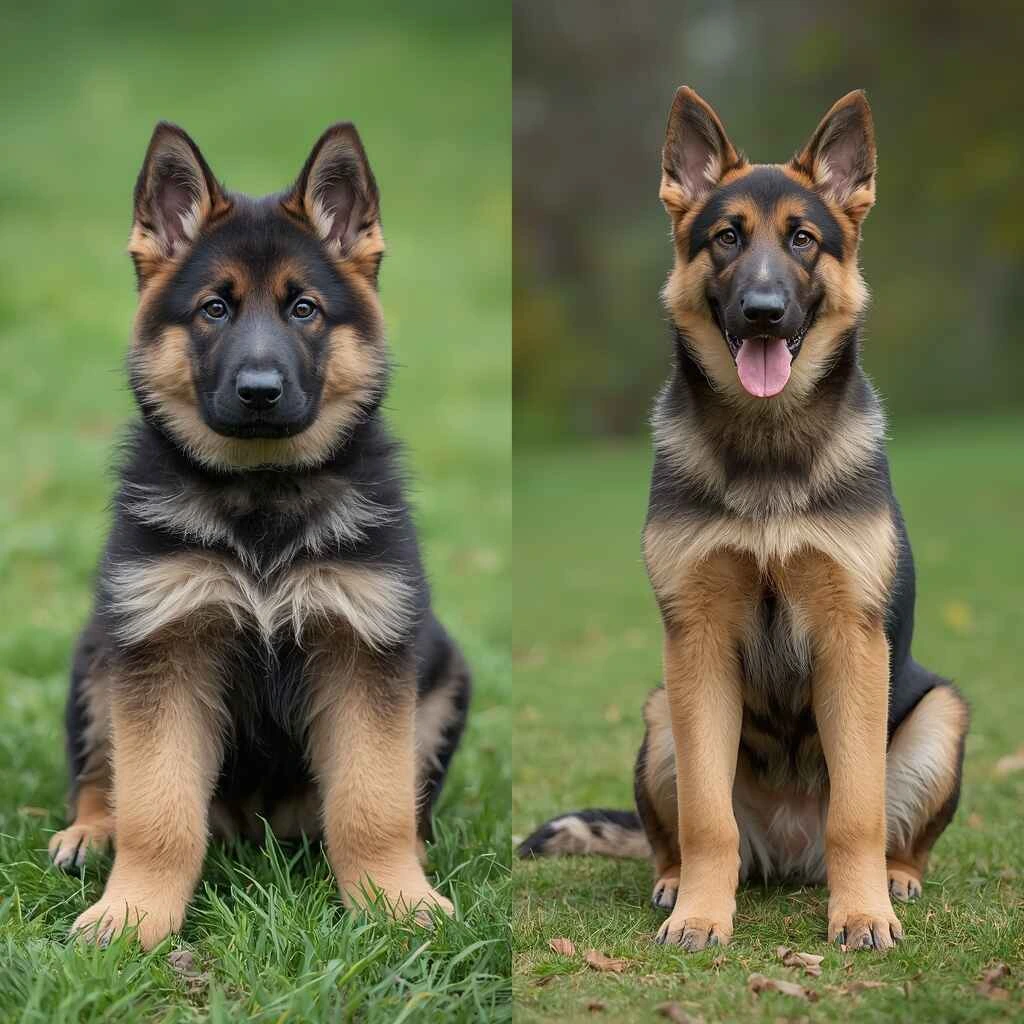
Physical Development: Weight ranges from 10-20 pounds depending on gender and genetics. Those oversized paws? They’re not lying—your puppy will grow into them fast.
Sleep Pattern: 18-20 hours per day. If your puppy isn’t sleeping this much, something’s wrong.
Your Primary Jobs This Month
Crate Training (Non-Negotiable): Your crate should be just large enough for them to stand, turn, and lie down—no bigger. Use a divider if you bought an adult-sized crate. Feed all meals inside with the door open for the first few days, then gradually close it for short periods while you’re nearby.
The goal isn’t punishment—it’s creating a den where they feel safe. By week 12, your puppy should voluntarily nap in their crate with the door open.
Potty Training Reality Check: At 8 weeks, your puppy can hold their bladder for approximately 2 hours maximum. Take them out immediately after: waking up, eating, playing, and every 1-2 hours in between. Use the same door, same spot, same command (“go potty”), and reward within 2 seconds of them finishing.
Accidents will happen. Clean them with an enzymatic cleaner (Nature’s Miracle works) and move on. Punishment creates fear, not understanding.
Socialization Window (The 12-Week Deadline): This is your most important job, and you’re already behind. The critical socialization window closes around 12-14 weeks. Your puppy needs positive exposure to:
- Different surfaces (grass, concrete, gravel, wood, tile)
- Household sounds (vacuum, doorbell, TV, dishwasher)
- Gentle, vaccinated dogs
- Different types of people (men, women, children, people in hats, people with canes)
- Car rides that end somewhere fun
What you skip now becomes a fear or reactivity issue later. I’m not exaggerating.
Hazel’s Reality Check: You will be exhausted. Your puppy will cry at night. You’ll question your life choices at 3 AM when they’re whining in their crate. This is normal. It gets better by week 10.
Month 2 (12-16 Weeks): The Bitey Land Shark Phase
What’s Happening
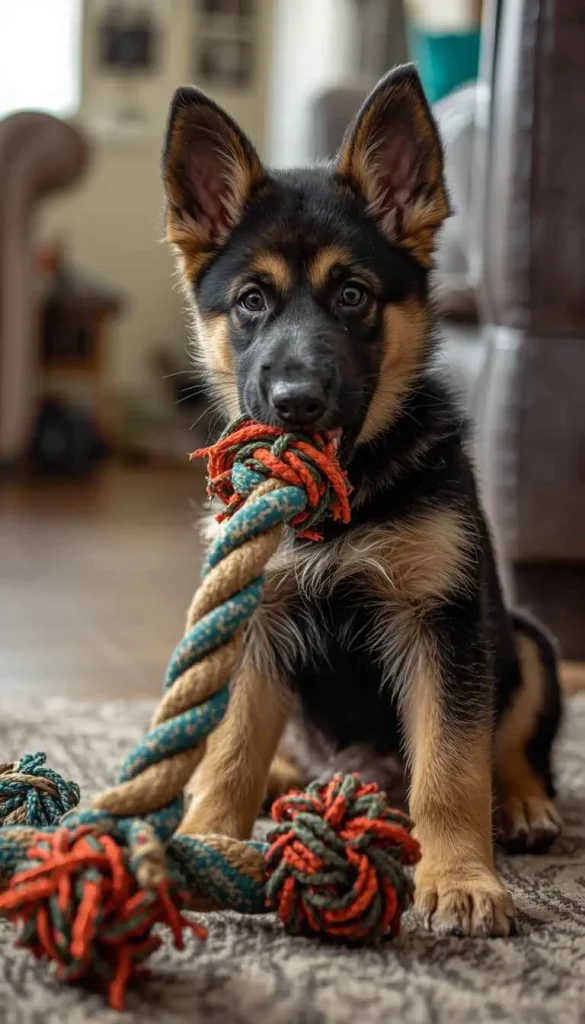
Welcome to peak teething and maximum mouthing. Your puppy’s adult teeth are coming in, their jaw hurts, and the only relief they know is chewing everything within reach—including your hands, ankles, and furniture.
Physical Development: 20-35 pounds. Their coordination improves daily, which means they’re getting into higher places and tighter spaces.
Your Primary Jobs This Month
Bite Inhibition Training: German Shepherds were bred to use their mouths for work. Puppy mouthing is normal; your job is teaching them how hard is too hard.
When they bite during play, give a high-pitched “OW!” and immediately stop all interaction for 10-15 seconds. Turn away, cross your arms, ignore them completely. Then resume play. If they bite again, repeat. After three strikes, playtime ends entirely and you leave the room.
This teaches them: gentle mouth = play continues; hard mouth = fun stops.
Teething Solutions: Freeze a wet washcloth and let them chew it. The cold numbs their gums. Keep rotating chew toys (Nylabones, Kong Puppy, rope toys) to maintain interest. If they go for your baseboards or furniture legs, redirect to an appropriate toy and praise heavily when they choose it.
First Vet Visits and Vaccinations: Your puppy should be on their second or third round of vaccines by now (DHPP series). Keep them away from dog parks and areas with unknown dogs until fully vaccinated around 16 weeks. Parvo and distemper are real threats.
Basic Commands Start Now: Your 12-week-old GSD is smarter than most adult dogs of other breeds. Start with sit, down, and come using high-value treats (small pieces of chicken, cheese, or hot dog). Keep sessions to 5 minutes, 3-4 times daily. End on success.
Hazel’s Warning: GSDs at this age will test boundaries like tiny scientists. If you let them on the couch once, they’ll remember for life. Decide your rules now and enforce them consistently.
Month 3 (16-20 Weeks): The Fearful Phase
What’s Happening
Around 16-18 weeks, many puppies hit their first fear period. Things that didn’t bother them last week—a plastic bag blowing in the wind, a stranger’s hat, a loud truck—suddenly become terrifying.
Physical Development: 35-50 pounds. They’re losing that round puppy belly and starting to look leggy and awkward.
Your Primary Jobs This Month
Navigate Fear Periods Carefully: Don’t coddle fearful behavior (that reinforces it), but don’t force them to confront scary things either. Use calm, neutral energy. If they’re scared of a trashcan, don’t drag them past it—walk by at a comfortable distance, reward calm behavior, and gradually decrease distance over days, not minutes.
Bad experiences during fear periods can create lifelong phobias. Take this seriously.
Increase Exercise Gradually: Your puppy can handle short walks now—15-20 minutes, twice daily. Avoid sustained running, jumping, or rough play with bigger dogs. Their growth plates are still developing and won’t fully close until 12-18 months. Overdoing it now creates orthopedic problems later.
Leash Manners Begin: Your GSD will pull. It’s what they do. Start teaching loose-leash walking now using the “stop-and-go” method: when they pull, you stop walking. Stand like a statue. The instant they look back or give slack, mark it (“yes!”) and resume walking. Pulling = no forward movement; loose leash = we go where you want.
This takes patience. Lots of it.
Mental Stimulation Becomes Critical: A tired puppy is a good puppy, but at this age, mental exhaustion beats physical. Use puzzle feeders, practice “find it” games with treats hidden around the house, and work on basic commands in new environments. A 10-minute training session wears them out more than a 30-minute walk.
Month 4-5 (20-28 Weeks): The Teenage Attitude Arrives
What’s Happening
Your sweet, eager-to-please puppy suddenly develops opinions. They know the commands—they just don’t care anymore. This is adolescence knocking, and it’s brutal.
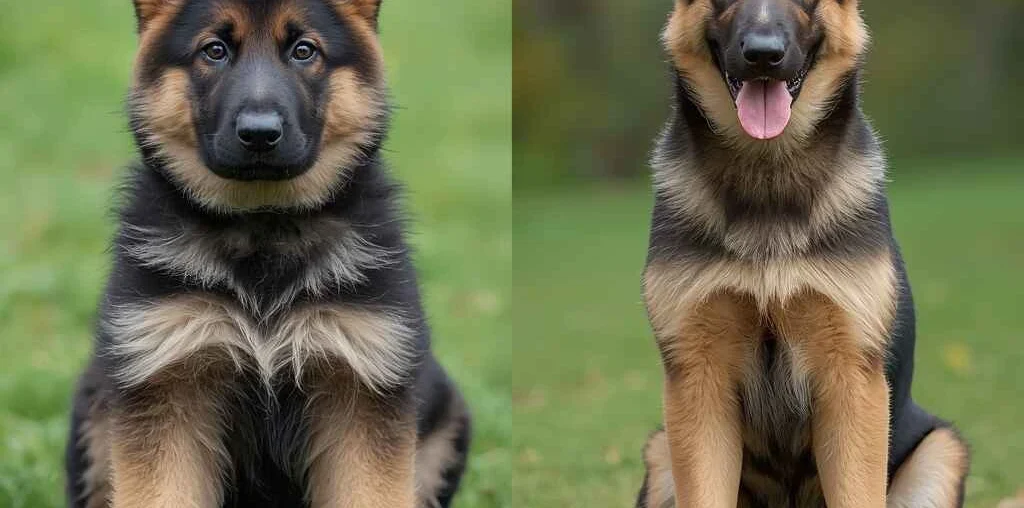
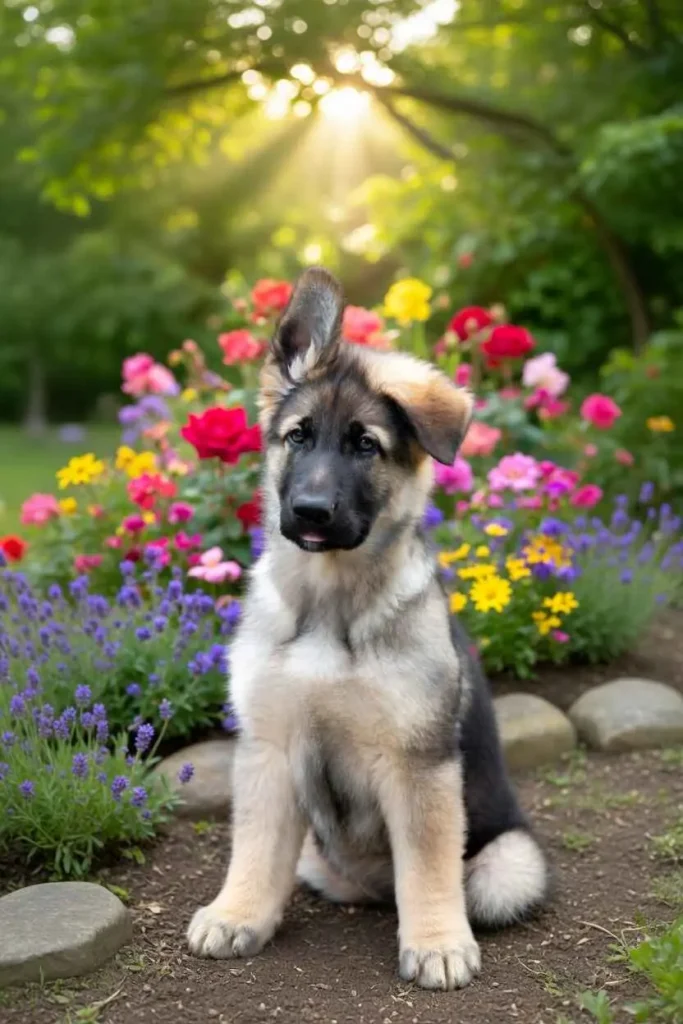
Physical Development: 50-65 pounds. They’re lanky, uncoordinated, and tripping over their own feet. Those ears might start standing up, or one might flop sideways while the other stands tall (the “lopsided phase” is real and hilarious).
Your Primary Jobs This Month
Reinforce Training Constantly: Regression is normal. Commands they knew perfectly last month? Forgotten. The solution isn’t frustration—it’s consistency. Go back to basics, use higher-value rewards, and practice in low-distraction environments before expecting performance in public.
Address Jumping Early: A 60-pound GSD jumping on guests isn’t cute anymore. The fix is simple but requires everyone’s cooperation: ignore jumping completely (turn away, cross arms, no eye contact, no pushing them down), and only give attention when all four paws are on the floor.
Socialization Continues: Your puppy is fully vaccinated now. Get them into group training classes, visit dog-friendly stores, and introduce them to as many novel experiences as possible. This builds confidence and prevents fear-based reactivity later.(socializing dogs)
Energy Management: Your GSD needs 45-60 minutes of exercise daily now, split between walks, play, and training. Under-exercised German Shepherds become destructive, anxious, and develop behavioral problems. This is a working breed. Act accordingly.
Hazel’s Reality: Month 5 is when most people surrender GSDs to shelters. They’re shocked by the energy, the mouthing, the stubbornness. Don’t be that person. This phase passes.
Month 6-7 (28-36 Weeks): The Hormonal Chaos
What’s Happening
Puberty hits hard. Males start marking, females may have their first heat, and everyone’s brain gets scrambled by hormones. Expect regression in training, increased reactivity to other dogs, and selective deafness.
Physical Development: 60-75 pounds. Adult teeth are fully in. Their build is filling out, though they’re still gangly.
Your Primary Jobs This Month
Spay/Neuter Decision: Talk to your vet about timing. Some recommend waiting until 12-18 months for large breeds to allow full skeletal development, while others prefer 6-9 months to avoid behavioral issues. There’s no universal right answer—discuss your dog’s specific health and behavior with your vet.
Manage Same-Sex Aggression: Intact males may start posturing with other males. Intact females can become aggressive around their heat cycle. Supervise all dog interactions closely and remove your puppy at the first sign of tension (stiff body, hard stare, raised hackles).
Recall Training Becomes Critical: Off-leash recall should be rock-solid before you trust your GSD in unfenced areas. Practice with a long line (20-30 feet) in safe spaces. Call them, reward generously when they come, then immediately release them to go play again. Coming to you should never mean fun ends.
Month 8-12 (36-52 Weeks): The Final Push
What’s Happening
Your puppy is physically almost full-grown but mentally still a teenager. The good news? The worst is behind you. The challenge? Don’t get complacent now.
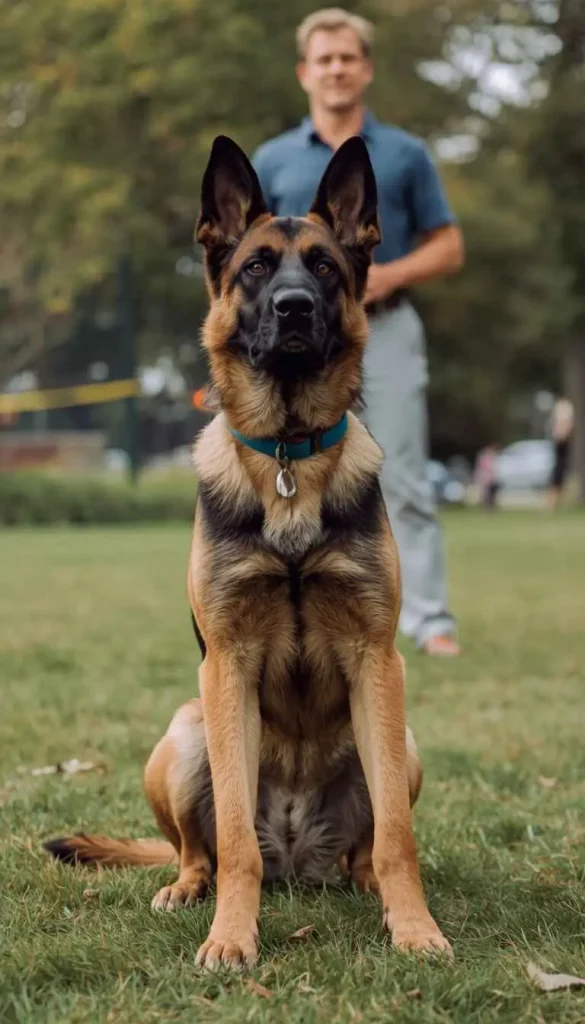
Physical Development: Males reach 70-90 pounds, females 55-75 pounds. Their adult coat is fully in. Ears are standing (if they’re going to).
Your Primary Jobs This Phase
Advanced Training: Enroll in intermediate obedience or a sport (agility, nose work, tracking). GSDs need jobs. Giving them structured work prevents boredom-based destruction.
Establish Routines: Your dog should have a predictable schedule for meals, exercise, and training. German Shepherds thrive on routine—it reduces anxiety and reinforces good behavior.
Address Resource Guarding Early: If your GSD shows any signs of guarding food, toys, or spaces (freezing, hard stare, growling), address it now with a certified trainer. This doesn’t go away on its own and can escalate into serious aggression. Preventing resource guarding
The One-Year Mark: Celebrate it. You survived the hardest year. Your GSD is still young—they won’t fully mature until 2-3 years old—but the foundation you’ve built this year determines everything that comes next.
The Gear You Actually Need
Forget the marketing. Here’s what matters:
Must-Haves:
- Properly fitted crate (adult size with divider)
- High-quality puppy food (large-breed formula to support joint development)
- Enzymatic cleaner for accidents
- Variety of chew toys (rotate weekly)
- 6-foot leash and flat collar (no retractable leashes, no choke/prong collars for puppies)
- High-velocity dryer or quality towels (for that double coat)
Worth the Investment:
- Puzzle feeders and interactive toys
- Professional training classes (group and private)
- Good pet insurance (hip dysplasia, bloat, and genetic conditions are real risks)
What I Wish Someone Had Told Me
Your German Shepherd puppy will be exhausting, frustrating, and occasionally infuriating. They’ll destroy things you love, embarrass you in public, and make you question why you didn’t get a goldfish.
But somewhere around month 10, something shifts. They’ll execute a perfect recall. They’ll rest their head on your lap during a thunderstorm. They’ll alert you to something wrong before you even notice it. And you’ll realize this isn’t just a dog—it’s a partnership.
The first year is brutal because it’s building something extraordinary. Every sleepless night, every chewed shoe, every training session in the rain—it compounds into a bond that most people with other breeds will never understand.
German Shepherds aren’t for everyone. But if you make it through the first year, you’ll have earned something rare: absolute loyalty from one of the most intelligent, capable, devoted dogs on the planet.
That’s worth every minute of the chaos.
More German Shepherd Guides
German Shepherd Colors: Complete Guide to Coat Colors & Patterns