


By Hazel Sloane
Is your German Shepherd constantly scratching, developing bald spots, or showing red, inflamed skin? Discover the causes, symptoms, and proven treatments that actually work.
Is your German Shepherd constantly scratching? Chewing their paws until they’re raw? Waking you up at night because they can’t stop licking their belly?
I know how heartbreaking it is to watch your GSD suffer from skin issues. The constant itching, the red inflamed patches, the bald spots that seem to appear overnight—it’s distressing for both of you.
Skin allergies are one of the most common health problems German Shepherds face. The good news? Most cases are manageable once you identify the cause and find the right treatment approach.
I’ve dealt with allergy issues in my own German Shepherds over the years, and I’ve learned that patience, observation, and sometimes a bit of trial and error are key to finding relief. Let me walk you through everything you need to know about GSD skin allergies—from identifying symptoms to long-term management strategies that actually work.

Why German Shepherds Are Prone to Skin Allergies
German Shepherds rank among the breeds most susceptible to allergies and sensitive skin issues. It’s not bad luck—there are real reasons why GSDs struggle more than other breeds.
Genetic Predisposition
Allergies often run in family lines. If a German Shepherd’s parents or grandparents had allergy issues, there’s a higher chance their offspring will too. Responsible breeders screen for this, but it’s not always preventable.
The Double Coat Factor
That thick, beautiful double coat that makes German Shepherds so striking? It can also trap allergens—pollen, dust, mold spores—right against their skin. While their dense undercoat helps with temperature regulation, it can also create the perfect environment for allergens to accumulate and cause reactions.
Immune System Sensitivity
Dogs with allergies have immune systems that overreact to substances that shouldn’t be threatening. Their bodies release histamines and other chemicals in response to triggers, leading to inflammation, itching, and all the symptoms we’ll discuss next.
Understanding that your GSD’s allergies aren’t a sign of poor breeding or your failure as an owner is important. Allergies are complex, multifactorial issues that many wonderful, healthy German Shepherds experience.
Common Signs Your GSD Has Skin Allergies
Catching allergy symptoms early can prevent secondary infections and help your dog feel better faster. Here’s what to watch for:
Visible Symptoms
Excessive scratching, licking, or biting at skin — If your GSD is constantly working at their skin, something’s bothering them. Pay attention to which areas they target most.
Red, inflamed skin — Check the belly, paws, ears, armpits, and groin area. These spots often show irritation first because the skin is thinner and more sensitive.
Bald spots or thinning fur — Hair loss from constant scratching or licking. These patches may be circular or irregular, and the skin underneath often looks irritated.
Hot spots — Moist, red, painful patches that appear suddenly. These are areas where your dog has licked or chewed so much that the skin becomes infected.
Scabs, crusty skin, or oozing sores — Signs that the skin barrier has been damaged and possibly infected.
Darkened skin (hyperpigmentation) — Chronic inflammation can cause the skin to thicken and darken, especially in areas of repeated irritation.
Thickened, elephant-like skin texture — Long-term allergies can cause the skin to become leathery and rough.

Behavioral Signs
Restlessness or inability to settle — A dog who can’t get comfortable because they’re itchy will pace, shift positions constantly, or have trouble sleeping.
Rubbing face or body against furniture — Trying to scratch hard-to-reach spots or relieve itching.
Head shaking or ear scratching — Ear infections are incredibly common in German Shepherds with allergies.
Paw chewing — Especially between the toes, where moisture and allergens can get trapped.
“Scooting” rear end on the floor — Can indicate allergies, anal gland issues, or parasites.
Secondary Issues
Unpleasant odor — A yeasty, musty smell often indicates a yeast infection secondary to allergies.
Chronic ear infections — If your GSD gets ear infections repeatedly, allergies are likely the underlying cause.
Skin infections — Scratching damages the skin barrier, allowing bacteria and yeast to move in.
Hazel’s Observation:
One of my German Shepherds would start obsessively licking her paws in early spring—that was always my first clue that allergy season was ramping up. Learning your dog’s early warning signs helps you intervene before things get severe.
The 4 Main Types of Skin Allergies in German Shepherds
Understanding which type of allergy your GSD has is crucial for effective treatment. Here are the four most common categories:
A. Food Allergies
Food allergies occur when your dog’s immune system identifies a specific ingredient—usually a protein—as a threat and launches an inflammatory response.
Most common food allergens for dogs:
- Beef
- Chicken
- Dairy products
- Wheat
- Corn
- Soy
- Eggs
How food allergies present:
- Year-round symptoms (no seasonal pattern)
- Itching, especially around the face, ears, paws, and rear end
- Chronic ear infections
- Gastrointestinal issues (diarrhea, vomiting, gas)
- Skin infections
Important distinction: Food allergies are different from food intolerances. An intolerance causes digestive upset but doesn’t involve the immune system. True food allergies cause immune reactions that manifest as skin and ear problems.
The gold standard for diagnosing food allergies is an elimination diet trial, which we’ll cover in detail later. Blood tests for food allergies exist but aren’t considered reliable by most veterinary dermatologists.
B. Environmental Allergies (Atopy)
Environmental allergies — also called atopic dermatitis — are reactions to inhaled or contact allergens in your dog’s surroundings.
Common environmental allergens:
- Pollen (trees, grass, weeds)
- Dust mites
- Mold spores
- Dander from other animals
Seasonal vs. year-round patterns:
- Spring allergies: tree pollen
- Summer allergies: grass pollen
- Fall allergies: weed pollen, mold
- Year-round: dust mites, indoor mold, other household allergens
German Shepherds with environmental allergies almost always develop chronic ear infections. If your GSD has recurring ear problems, environmental allergies are likely involved.
Hazel’s Experience:
My older GSD had terrible spring allergies. Every April like clockwork, the paw licking would start, followed by ear infections within a week or two. Once I recognized the pattern, I could start preventive treatment early.
C. Flea Allergy Dermatitis (FAD)
Flea allergy dermatitis is the most common allergy in dogs. It’s not the flea itself that causes the problem,it’s an allergic reaction to proteins in flea saliva.
Here’s the frustrating part: it only takes one flea bite to trigger a reaction that lasts for weeks. You don’t need a flea infestation for your dog to suffer from FAD.
Where symptoms appear:
- Base of the tail
- Rear end and back legs
- Inner thighs
- Lower back
What to look for:
- Intense itching in the areas listed above
- Hair loss and red, irritated skin
- Small scabs (called “flea dirt”)
- Obsessive biting at the tail base
Even if you don’t see fleas on your dog, they could still be the problem. Fleas jump on, bite, and jump off. You might never catch them in the act.
How to check for fleas:
- Use a flea comb, especially around the tail base and neck
- Look for “flea dirt” (black specks that turn red when wet—that’s digested blood)
- Check your dog’s bedding for signs of fleas
The solution? Year-round flea prevention for ALL pets in your household, even if they’re indoor-only. We’ll cover specific products later.
D. Contact Allergies
Contact allergies are the least common type but still worth understanding. These occur when your dog’s skin reacts to something they physically touch.
Possible triggers:
- Grass, plants, or weeds
- Cleaning products or detergents
- Shampoos or grooming products
- Fabrics (carpets, bedding)
- Chemicals (lawn treatments, de-icing salt)
How contact allergies present:
- Symptoms appear where the dog had contact with the allergen
- Common areas: belly, paws, face (if rubbing against something)
- Less likely to cause ear infections than other allergy types
Contact allergies are diagnosed through process of elimination—literally removing potential triggers one at a time and watching for improvement.

When to See a Vet (And What Tests They’ll Run)
Some allergy issues you can manage at home, but others require professional help. Here’s when it’s time to make an appointment:
See your vet if:
- Symptoms have lasted more than a week without improvement
- The itching is so severe your dog can’t sleep or function normally
- You see open sores, bleeding, or signs of infection (oozing, foul smell)
- Bald spots are spreading rapidly
- Your dog seems miserable or is in obvious pain
- Home treatments haven’t helped
- You’re not sure what’s causing the problem
What to Expect at the Vet Visit
Your vet will likely perform several diagnostic tests to identify the cause and rule out other conditions:
1. Skin scraping — Rules out mange mites (sarcoptic or demodectic)
2. Cytology — A quick test where the vet presses tape or a slide against the skin to check for yeast or bacterial infections under a microscope
3. Fungal culture — Rules out ringworm, which can look similar to allergies
4. Allergy testing — Blood tests or intradermal (skin prick) testing to identify environmental allergens. These tests are most useful if you’re considering immunotherapy.
5. Elimination diet trial — The only reliable way to diagnose food allergies
Cost transparency:
Basic vet visits for allergies typically run $75-150 for the exam plus $50-200 for diagnostic tests. Treatment costs vary widely depending on what’s needed—anything from $30/month for antihistamines to $200+/month for advanced medications like Apoquel or Cytopoint.
Treatment timeline:
Allergies rarely resolve overnight. Expect to wait 2-4 weeks to see significant improvement, and some treatments (like food trials or immunotherapy) take months to show full results.
Hazel’s Reality Check:
I spent months and several hundred dollars figuring out that one of my GSDs had chicken allergies. It was frustrating, but the relief on her face once we got it right was worth every penny and every vet visit.
How to Fix Food Allergies in German Shepherds
If your vet suspects food allergies, an elimination diet trial is the most reliable diagnostic and treatment approach.
The Elimination Diet Process
Step 1: Choose a Novel Protein Diet (8-12 weeks)
A “novel protein” is a protein source your dog has never eaten before. The idea is to feed only that protein and a single carbohydrate source for at least 8 weeks while monitoring symptoms.
Novel protein options:
- Venison
- Duck
- Kangaroo
- Rabbit
- Salmon
- Bison
You have two choices:
Option A: Limited ingredient commercial food
Look for veterinary prescription diets or high-quality limited ingredient foods with a single novel protein and carb source.
Option B: Homemade diet
Cook meals using the novel protein and a safe carbohydrate (like sweet potato). If you go this route, work with your vet or a veterinary nutritionist to ensure the diet is balanced.
Critical rules during the trial:
- No treats unless they’re made from the same protein
- No table scraps
- No flavored medications (ask your vet for unflavored versions)
- No rawhides, bully sticks, or dental chews
- Everyone in the household must follow the rules (one slip-up can ruin the trial)
This is where most people fail. It requires discipline, but it’s the only way to know for sure.
Diet plays a huge role in skin health.
Learn exactly what to feed your German Shepherd in our Complete GSD Food Guide — including foods that support healthy skin and reduce inflammation.
Step 2: Monitor Symptoms
Keep a journal or take weekly photos. Track:
- Itching intensity (scale of 1-10)
- Areas of redness or irritation
- Ear condition
- Energy level and behavior
- Any digestive changes
Most dogs with food allergies will show improvement within 4-8 weeks if you’ve identified and removed the trigger.
Step 3: Food Challenge
Once your dog has been symptom-free for several weeks on the elimination diet, it’s time to identify which foods are safe.
Reintroduce one protein at a time (for example, add chicken back in for 2 weeks). If symptoms return, you’ve identified a trigger. If symptoms don’t return, that food is safe.
Continue this process until you’ve tested all the proteins you want to feed.
Long-Term Management
Once you know which foods cause reactions:
- Stick with safe proteins
- Read ingredient labels carefully (chicken can hide in unexpected places)
- Consider hydrolyzed protein diets if your dog reacts to multiple proteins
What to look for in limited ingredient foods:
- Named meat as the first ingredient
- Single protein and carb source
- No common allergens (no chicken, beef, dairy, wheat, corn, soy)
- No artificial additives or fillers
Managing Environmental Allergies
Environmental allergies can’t be “cured,” but they can absolutely be managed. Here’s how:
Immediate Relief Strategies
Wipe paws and body after walks
Use unscented baby wipes or a damp cloth to remove pollen and other allergens before they have a chance to cause problems. Focus on paws, belly, and face.
Bathe weekly during allergy season
Regular baths with a hypoallergenic or medicated shampoo can remove allergens from the coat and soothe irritated skin. Don’t overdo it outside of allergy season, though—too much bathing strips natural oils.
HEPA air filters
Run HEPA filters in rooms where your dog spends the most time. They capture airborne allergens like pollen, dust, and dander.
Wash bedding frequently
Launder your dog’s bedding in hot water weekly to remove accumulated allergens.
Keep windows closed during high pollen days
Check your local pollen forecast and keep your dog indoors with windows closed when counts are high.
🐕 Reduce allergens with proper grooming.
Our German Shepherd Shedding: Complete Survival Guide shows you how to minimize allergen buildup through smart brushing routines and coat maintenance.
Medical Management Options
Antihistamines
Over-the-counter antihistamines can help mild to moderate allergies. Options include:
- Benadryl (diphenhydramine): 1mg per pound of body weight, 2-3 times daily
- Zyrtec (cetirizine): 0.5mg per pound once daily
- Claritin (loratadine): 0.25mg per pound once or twice daily
Always check with your vet before giving any medication. Some dogs respond well to antihistamines, others see no benefit.
Apoquel (prescription)
A prescription medication that blocks the itch signal at the source. It works quickly (often within hours) and is effective for most dogs. Used for short-term or long-term management.
Cytopoint (prescription injections)
A monthly injection that neutralizes the protein responsible for itching. Each injection lasts 4-8 weeks. Great for dogs who can’t take oral medications or whose owners struggle with daily pills.
Steroids (short-term only)
Prednisone and other steroids are highly effective for stopping itching and inflammation, but they come with side effects (increased thirst, appetite, and urination; long-term use can cause more serious issues). Vets use these for short-term relief or when nothing else works.
Immunotherapy / Allergy Shots
If you’ve done allergy testing and identified specific triggers, your vet can create custom allergy shots that gradually desensitize your dog’s immune system. This is a long-term solution (takes 6-12 months to see results) but can be life-changing for dogs with severe environmental allergies.
Natural Supplements That Help
Omega-3 fatty acids (fish oil)
Anti-inflammatory properties support skin health and can reduce itching. Look for high-quality fish oil with EPA and DHA. Typical dosage: 20-55mg of combined EPA/DHA per pound of body weight daily.
Quercetin
Often called “nature’s Benadryl,” quercetin is a natural antihistamine found in certain plants. Some dogs respond well to it as a supplement.
Probiotics
A healthy gut supports a healthy immune system. Probiotic supplements can help some dogs with allergy management.
Colostrum
Contains immune-modulating compounds that may help with allergies and gut health.
When each option makes sense:
- Mild allergies: Try antihistamines and omega-3s first
- Moderate allergies: Add in Apoquel or Cytopoint
- Severe allergies: Combination approach + possibly immunotherapy
- Budget-conscious: Start with antihistamines, environmental management, and diet optimization

Treating Flea Allergies
If your German Shepherd has flea allergy dermatitis, prevention is absolutely everything. Even one flea bite can trigger weeks of misery.
Year-Round Flea Prevention
This is non-negotiable. Even if you live in a cold climate, fleas can survive indoors year-round.
Prescription options (most effective):
- Oral medications: Simparica, NexGard, Bravecto, Credelio
- Topical medications: Revolution Plus, Advantage Multi
Over-the-counter options (less reliable):
- Frontline, Advantage II
Prescription products are significantly more effective than OTC options. They kill fleas faster and provide better protection.
Treat ALL pets in the household — If you have multiple dogs or cats, everyone needs flea prevention. Otherwise, you’ll have a never-ending cycle of reinfestation.
Environmental Treatment
If you’ve discovered fleas in your home:
- Vacuum thoroughly — Floors, furniture, baseboards, cracks. Dispose of the vacuum bag immediately.
- Wash all bedding — Dog beds, human bedding, blankets, anything your dog has contact with. Hot water and high heat in the dryer.
- Treat your yard — Flea sprays or professional pest control for outdoor areas where your dog spends time.
- Consider professional pest control — For severe infestations, this might be necessary.
If Your GSD Already Has FAD
- Start flea prevention immediately
- Give anti-itch medication for relief (Apoquel, Cytopoint, or short-term steroids)
- Address secondary skin infections with antibiotics or antifungal medications if needed
- Use an e-collar if your dog is making the irritation worse by licking or chewing
Hazel’s Tip:
I keep my GSDs on year-round prescription flea prevention. It’s expensive, but it’s cheaper than treating flea allergies and infinitely better for my dogs’ quality of life.
Home Remedies & Soothing Solutions
Sometimes you need quick relief while waiting for medications to work or vet appointments to happen. Here are safe, vet-approved options:
For Immediate Itch Relief
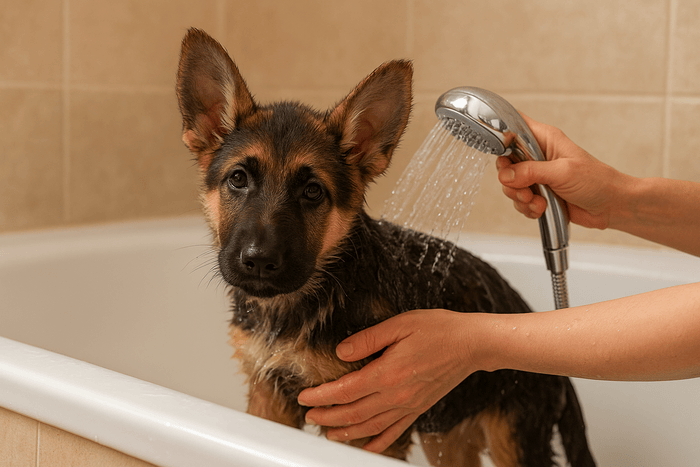
Oatmeal baths
Colloidal oatmeal (finely ground oats) soothes inflamed skin. You can buy pre-made oatmeal shampoos or make your own by grinding plain oats in a blender and mixing with warm water. Let your dog soak for 10-15 minutes.
Apple cider vinegar rinse
Dilute apple cider vinegar 50/50 with water and use as a final rinse after bathing. It has antibacterial and antifungal properties and can soothe itchy skin. Don’t use on open wounds or raw skin—it will sting.
Coconut oil (topically)
A thin layer of coconut oil can moisturize dry, flaky skin. Use sparingly—too much can make a mess and potentially cause stomach upset if your dog licks it off.
Cold compresses
For hot spots or localized irritation, a cold, damp cloth can provide immediate relief and reduce swelling.
E-collar (cone of shame)
If your dog is making things worse by constant licking or chewing, an e-collar prevents further damage and allows the skin to heal.
What NOT to Use
Tea tree oil — Toxic to dogs in concentrated form. Avoid it.
Human lotions or creams — Many contain zinc, fragrances, or medications that are harmful if ingested.
Alcohol or hydrogen peroxide on open wounds — These damage healthy tissue and slow healing. Use only if your vet specifically recommends it.
DIY Anti-Itch Spray
Ingredients:
- 1 cup water
- 1 tablespoon apple cider vinegar
- 1 tablespoon aloe vera gel (100% pure, no additives)
Mix in a spray bottle and mist onto irritated areas (avoid face and open wounds). Store in the fridge for up to a week.
When to use:
Between baths or vet visits for mild itching. Not a substitute for veterinary care if symptoms are severe.
Preventing Skin Infections (Secondary Issues)
Allergies don’t just cause itching—they often lead to secondary bacterial or yeast infections that make everything worse.
Why Allergies Lead to Infections
When your dog scratches, licks, or chews at their skin, they damage the protective skin coat. Bacteria and yeast that normally live on the skin surface can then move into the damaged tissue and multiply.
Moisture, warmth, and inflammation create the perfect environment for these organisms to thrive. Once an infection sets in, itching intensifies, your dogi scratches more, and the cycle continues.
Signs of Secondary Infection
- Foul odor (especially a yeasty, musty smell)
- Oozing or crusty lesions
- Increased redness and swelling
- Pain when you touch affected areas
- Fever or lethargy
Treatment
Bacterial infections:
- Oral antibiotics (typically 3-6 weeks)
- Topical antibiotic ointments
- Medicated shampoos containing chlorhexidine
Yeast infections:
- Antifungal medications (oral or topical)
- Medicated shampoos containing ketoconazole or miconazole
General care:
- Keep affected areas clean and dry
- Use an e-collar to prevent licking
- Follow your vet’s instructions completely—stopping antibiotics early can lead to resistant infections
Prevention
The best way to prevent infections is to address the underlying allergies before skin damage occurs. Regular skin checks, early intervention, and proper allergy management keep secondary infections at bay.
Long-Term Allergy Management Plan
Allergies are rarely a one-time problem. Most German Shepherds with allergies need ongoing management. Here’s how to create a sustainable routine:
Daily
- Wipe paws and belly after outdoor time (especially during allergy season)
- Check skin during petting or playtime—look for new hot spots, redness, or irritation
- Administer any medications or supplements as prescribed
Weekly
- Thorough skin inspection (lift fur and check areas prone to problems)
- Bath if needed during heavy allergy season
- Wash dog bedding in hot water
Monthly
- Administer flea prevention (mark it on your calendar so you don’t forget)
- Deep clean living spaces—vacuum thoroughly, wash any fabric your dog contacts
- Review food ingredients if feeding commercial food (manufacturers sometimes change formulas)
Seasonally
- Adjust routine based on allergy triggers (increase bathing frequency in spring if pollen is the issue)
- Stock up on supplies before peak allergy season hits
- Schedule a vet check-up if symptoms typically worsen during certain times of year
Keep a Health Journal
Track symptoms, triggers, what works, and what doesn’t. This information is invaluable when working with your vet and helps you identify patterns over time.
What to record:
- Date and symptoms observed
- Environmental factors (pollen count, new detergent, different food)
- Treatments tried and results
- Vet visit notes and medication changes
Common Mistakes GSD Owners Make
Even with the best intentions, it’s easy to make mistakes when managing allergies. Avoid these common pitfalls:
1. Waiting too long to see a vet
Hoping it will resolve on its own just allows your dog to suffer longer and increases the risk of secondary infections.
2. Inconsistent treatment
Stopping medications as soon as symptoms improve often leads to relapse. Follow your vet’s instructions completely, even if your dog seems better.
3. Not treating all pets for fleas
If you have multiple pets and only treat one, fleas will continue to thrive on the untreated animals and reinfest your dog.
4. Giving table scraps during an elimination diet trial
One piece of chicken can ruin months of effort. Everyone in your household must be on board.
5. Using human products on dog skin
Dogs lick their skin constantly. What’s safe for human skin isn’t always safe for dogs to ingest.
6. Over-bathing
Bathing too frequently strips natural oils and can actually worsen dry, itchy skin. Follow appropriate bathing guidelines for German Shepherds.
7. Ignoring ear infections
Chronic ear infections are often a sign of allergies. Treating the ears without addressing the underlying allergy means they’ll keep coming back.
8. Not reading food labels carefully
Allergens can hide in treats, dental chews, and even some medications. Always read ingredient lists.
When Allergies Might Be Something Else
Sometimes what looks like allergies is actually a different condition entirely. If your dog’s symptoms don’t respond to typical allergy treatments, consider these possibilities:
Conditions That Mimic Allergies
Mange (mites)
Both sarcoptic mange (scabies) and demodectic mange cause intense itching and hair loss. Diagnosed with a skin scraping.
Ringworm
A fungal infection that causes circular areas of hair loss. Not actually a worm — it’s a fungus. Diagnosed with a fungal culture.
Autoimmune diseases
Conditions like pemphigus cause skin lesions and blistering. These require specific testing and treatment.
Hormonal imbalances
Hypothyroidism (low thyroid) and Cushing’s disease can cause skin and coat problems. Diagnosed with blood tests.
Nutritional deficiencies
Lack of essential fatty acids or other nutrients can cause poor coat quality and skin issues.
Red Flags That It’s NOT Allergies
- Sudden onset in an older dog with no previous history
- Symptoms don’t respond at all to typical allergy treatments
- Rapid progression or signs of systemic illness (fever, weight loss, lethargy)
- Skin lesions that look unusual (blisters, ulcers, thick crusts)
When in doubt, see your vet. Proper diagnosis is essential for effective treatment.
Final Thoughts
keeping life with a German Shepherd who has skin allergies isn’t easy. The constant scratching, the vet visits, the trial and error—it can be exhausting and emotionally draining.
But here’s what I want you to know: most allergy cases are manageable. With the right approach, patience, and partnership with your veterinarian, your GSD can be comfortable and happy.
It might take time to figure out what works for your specific dog. You might try several treatments before finding the right combination. That’s normal. Don’t give up.
Your German Shepherd depends on you to advocate for them, to notice when something’s wrong, and to keep searching for solutions even when it’s frustrating. The fact that you’re reading this article tells me you’re already doing that.
Pay attention to your dog’s patterns. Keep records. Communicate clearly with your vet. Be consistent with treatments. And give yourself grace when things don’t go perfectly.
Your GSD’s comfort and quality of life are worth the effort. And when you finally see them sleeping peacefully instead of scratching all night, or playing joyfully instead of obsessively licking their paws, you’ll know every vet visit and every lifestyle adjustment was worth it.
More German Shepherd Health Guides:
- Why Is My German Shepherd So Clingy? — Understanding attachment and anxiety
- Can German Shepherds Eat Bananas? (Plus 15 Safe Fruits & Veggies) — Complete food safety guide
- German Shepherd Shedding: Complete Survival Guide — Coat care and grooming tips
Browse all our GSD care guides →
Trusted Resources
- AKC — Dog Allergies: Symptoms and Treatment
- VCA Animal Hospitals — Allergies in Dogs
- Veterinary Partner — Atopic Dermatitis in Dogs
Has your German Shepherd dealt with skin allergies? Share your experience in the comments below — what worked for your GSD? Other owners would love to hear your story!