
Tag

German Shepherds

Browsing

By Hazel Sloane

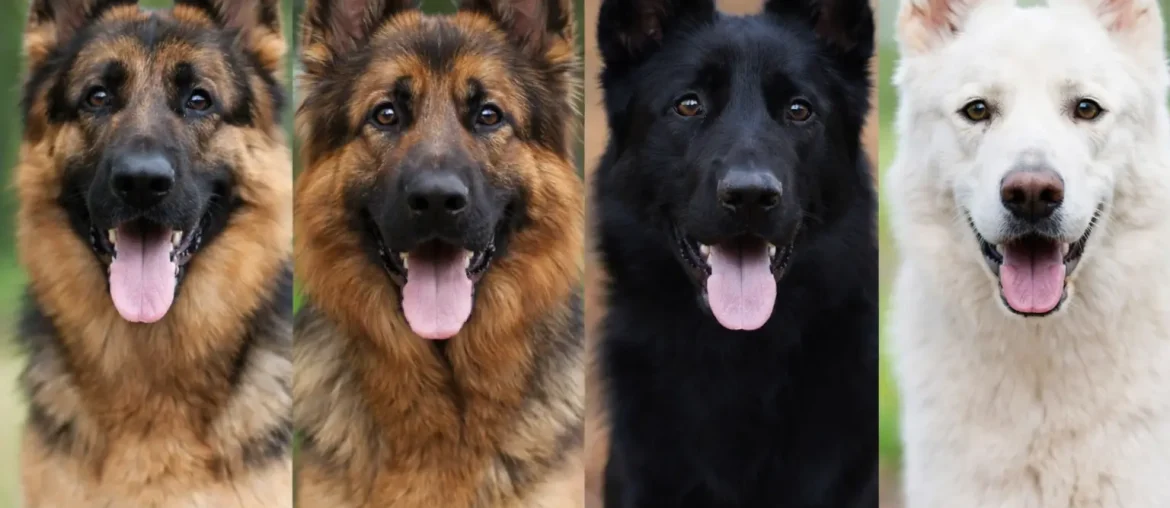
Discover all German Shepherd color variations from classic black and tan to rare white, blue, and panda GSDs. Learn which colors meet breed standards and how genetics determine coat color.


When I tell people that I have a German Shepherd, most picture the classic black and tan coloring the iconic look seen in police dogs and movies. But Luna is a rich sable color that shifts from light gold to dark charcoal depending on the light. People are often surprised to learn she’s a purebred German Shepherd.

Real truth is, German Shepherds come in a stunning variety of colors and patterns, each with its own unique beauty. Some are recognized by major kennel clubs, while others are considered rare or non-standard. Understanding these color variations helps you appreciate the diversity within this magnificent breed.

Whether you’re choosing a German Shepherd puppy, curious about color genetics, or simply fascinated by the range of GSD appearances, this complete guide covers all things you need to know about German Shepherd colors.


Standard German Shepherd Colors (AKC Recognized)

The American Kennel Club recognizes specific German Shepherd colors as meeting breed standards. These are the colors you’ll see in conformation shows and from reputable breeders focused on breed standards.

1. Black and Tan
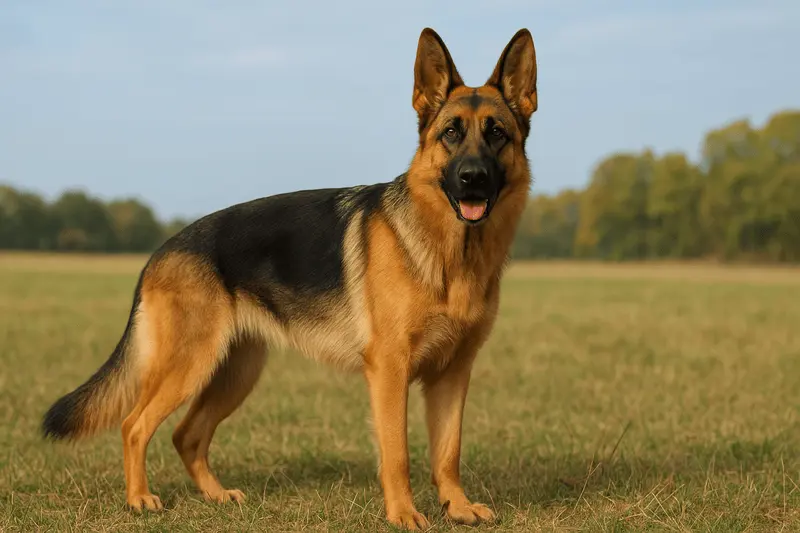
Classic black and tan German Shepherd with saddle pattern coat

Most common and iconic GSD color

Appearance:

  • Tan or cream body with black saddle marking across back
  • Black face mask
  • Black along the spine, tail, and legs
  • Tan ranges from light cream to deep red

Pattern variations:

  • Classic saddle pattern (black V-shape over back)
  • Blanket pattern (more extensive black coverage)

Why it’s so common:
This coloring is genetically dominant, making it the most frequently seen pattern. It’s also the “traditional” GSD look that most people recognize instantly.

Hazel’s Note:
This is the color most people think of when they picture a German Shepherd. It’s stunning and timeless, though I’m admittedly biased toward my sable girl.


2. Black and Red
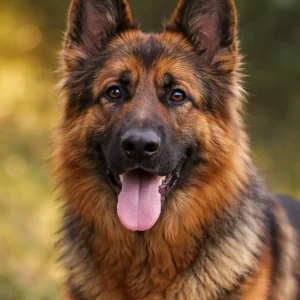
Classic black and red German Shepherd

Richer, more vibrant version of black and tan

Appearance:

  • Similar pattern to black and tan
  • Tan areas are deeper red or mahogany instead of tan
  • More saturated, intense coloring
  • Black saddle or blanket pattern

Distinction from black and tan:
The red coloring is richer and more pigmented than standard tan. In sunlight, the red tones are especially striking.

Popularity:
Highly sought after by many breeders and owners who prefer the more dramatic coloring. Often seen in show lines and working lines.


3. Sable (Gray Sable/Agouti)
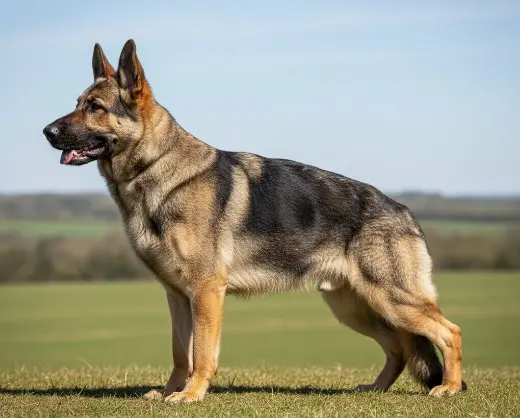
Sable_German_Shepherd_showing_agout_ multi toned_coat_color

Wild-type coloring, closest to original German Shepherd appearance

Appearance:

  • Each individual hair is banded with multiple colors (black, brown, gray, tan)
  • Overall appearance ranges from light gray to dark charcoal
  • Can appear to change color in different lighting
  • No distinct pattern like saddle markings
  • More “wolfish” appearance

Color variations within sable:

  • Light sable (more tan/gold)
  • Dark sable (more black/charcoal)
  • Gray sable (silvery tones)

Genetics:
Sable is actually the dominant color gene in German Shepherds, though black and tan appears more common due to selective breeding preferences.

Why I love it:
Luna’s sable coat is like a living painting. In bright sunlight, she looks golden. In shade, she appears almost charcoal. The multi-toned banding on each hair creates incredible depth and richness.


4. Solid Black
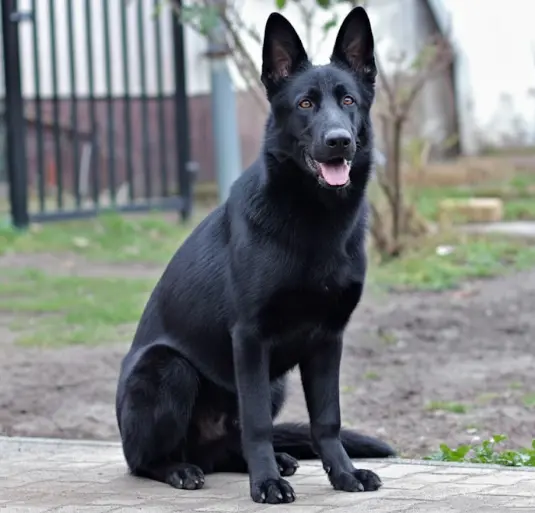
Solid_black_German_Shepherd_purebred_with_no_tan_markings

Striking, entirely black German Shepherds

Appearance:

  • Completely black from nose to tail
  • No tan, brown, or other color markings
  • May have small white chest spot (still considered solid black)
  • Coat can be shiny or matte

Rarity:
Less common than black and tan but not rare. Requires both parents to carry the recessive black gene.

Misconceptions:
Solid black GSDs are NOT a different breed. They’re purebred German Shepherds with recessive color genetics.

Temperament myth:
Black GSDs have the same temperament as any other color. Color doesn’t affect personality, drive, or trainability.

Show eligibility:
Fully recognized by AKC and allowed in conformation shows.


5. Bicolor

Mostly black with minimal tan markings

Appearance:

  • Predominantly black coat (80-90% black)
  • Small tan markings on legs, feet, face, or under tail
  • Less tan than black and tan pattern
  • Often mistaken for solid black from a distance

Difference from black and tan:
Bicolor has much less tan—just accent points rather than full body tan.

Genetics:
Result of genes that restrict the tan/red pigment to minimal areas.

Popularity:
Loved for the dramatic, mostly-black appearance while still showing the classic GSD tan points.


Non-Standard German Shepherd Colors

These colors occur naturally in German Shepherds but are not recognized by the AKC breed standard. Dogs with these colors cannot compete in conformation shows, though they can participate in obedience, agility, and other performance events.

6. White German Shepherd
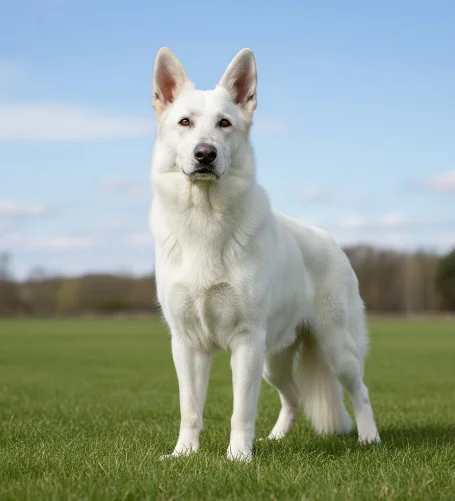
White_German_Shepherd_with_dark_eyes_and_nose_not_albino

Controversial but beautiful solid white coat

Appearance:

  • Pure white coat from head to tail
  • Dark eyes and nose (not albino)
  • Pink or dark paw pads
  • Same structure and build as standard GSDs

Important distinction:
White GSDs are NOT albino. They have normal pigmentation in eyes and nose. The white coat is caused by a recessive gene that masks other colors.

Breed recognition:

  • Not recognized by AKC for conformation
  • Recognized as separate breed by United Kennel Club (called “White Shepherd”)
  • Controversial in GSD community

Health:
No health issues associated with white coat color. They’re as healthy as any other GSD color.

Temperament:
Identical to other German Shepherds. Color doesn’t affect personality or working ability.

Why the controversy:
Some believe white dogs should be removed from breeding programs to preserve traditional GSD appearance. Others argue white is a natural color variation that shouldn’t be discriminated against.


7. Blue German Shepherd

Blue-German-Shepherd-with diluted-gray-coat-color

Diluted black coloring creating blue-gray appearance

Appearance:

  • Blue-gray or steel-gray coat
  • Can have blue and tan pattern (similar to black and tan)
  • Grayish nose and paw pads
  • Lighter, sometimes amber-colored eyes

Genetics:
Blue is a dilution gene acting on black pigment. It’s recessive, requiring both parents to carry the gene.

Health concerns:
Blue dogs can be prone to Color Dilution Alopecia (CDA), a condition causing hair loss and skin issues. Not all blue dogs develop it, but it’s a risk.

Breed standard:
Not recognized by AKC. Considered a fault in conformation showing.

Rarity:
Relatively rare. Some breeders specifically breed for blue, while others avoid it due to health concerns.


8. Liver (Brown) German Shepherd

Brown instead of black pigment

Appearance:

  • Brown coat where black would normally be
  • Can be liver and tan (brown saddle with tan body)
  • Light brown, amber, or green eyes
  • Brown nose and paw pads

Genetics:
Recessive gene that changes black pigment to brown. Both parents must carry the gene.

Breed standard:
Not recognized by AKC. Very rare in German Shepherds.

Health:
No specific health issues associated with liver coloring.


9. Panda German Shepherd
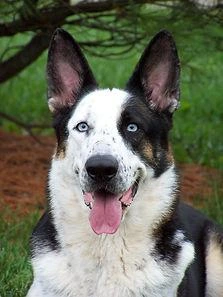
Rare_panda_German_Shepherd with_piebald_white_markings

Extremely rare piebald pattern

Appearance:

  • Classic German Shepherd coloring (black and tan) with white spotting
  • White chest, paws, face markings, or belly
  • Symmetrical or asymmetrical white patches
  • Looks like a GSD with “paint splashes”

Origin:
First documented in 2000 from a spontaneous mutation. All panda GSDs trace back to a single dog named “Lewcinka’s Franka von Phenom.”

Genetics:
Caused by KIT gene mutation affecting pigment distribution. Extremely rare—requires specific genetic inheritance.

Breed standard:
Not recognized by AKC. Cannot be shown in conformation.

Rarity:
One of the rarest GSD color variations. Panda GSDs are highly unusual and often expensive.

Health:
No health issues specifically linked to panda coloring.


How German Shepherd Color Genetics Work
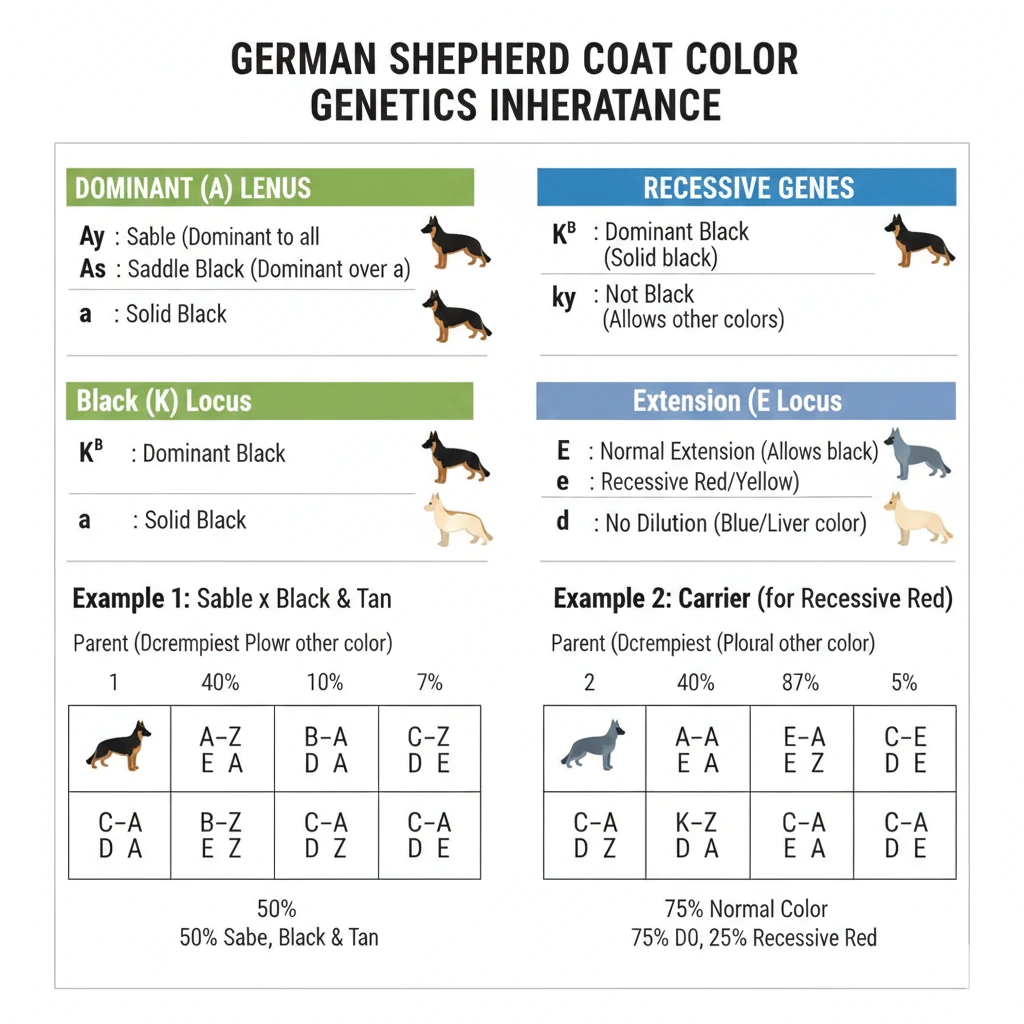
German_Shepherd_color_genetics_inheritance_chart_showing dominant_and_recessive_genes

Understanding basic color genetics helps explain why certain colors appear and how breeders can predict puppy colors.

Dominant vs. Recessive Genes

Dominant genes (show up even if only one parent carries them):

  • Sable (most dominant)
  • Black and tan

Recessive genes (require both parents to carry the gene):

  • Solid black
  • Blue
  • Liver
  • White

Color Inheritance Simplified

Two black and tan parents:
Can produce black and tan, sable (if carrying sable gene), or solid black (if both carry recessive black)

Two sable parents:
Typically produce sable puppies, but can produce black and tan if both carry that gene

Two solid black parents:
Will only produce solid black puppies

Predicting puppy colors:
Requires knowing the parents’ genetic makeup, not just their appearance. A black and tan dog might carry genes for sable, black, or even blue without showing those colors.


Color Changes: Puppy to Adult
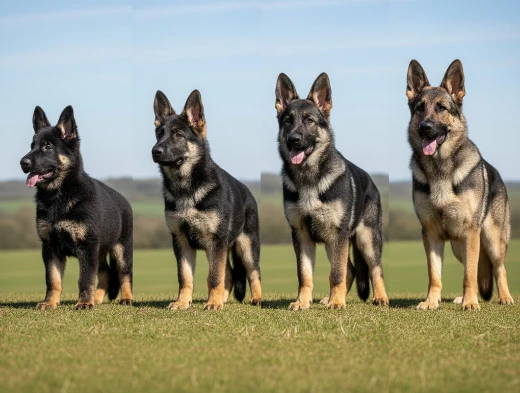
German-Shepherd-puppy-color-change-from-dark-puppy-to-adult-sable

German Shepherd puppies often change color dramatically as they mature.

Common Color Changes

Black puppies:

  • May develop tan points as they grow (becoming bicolor or black and tan)
  • Solid black puppies usually stay black

Sable puppies:

  • Born darker, often appearing almost black
  • Lighten significantly as adult coat grows in
  • Final adult color not evident until 2-3 years old

Black and tan puppies:

  • Tan areas may darken or lighten
  • Black saddle may expand (blanket pattern) or stay defined

White puppies:

  • Born white, stay white
  • May appear cream as puppies, pure white as adults

When Final Color Appears

Most GSDs: Final adult coloring evident by 2-3 years old
Sables: Can continue darkening or lightening throughout life
Black and tan: Relatively stable, though tan intensity may shift

Hazel’s Experience:
Luna was nearly black as a puppy. I thought I had a solid black GSD. As her adult coat came in around 6-8 months, the sable pattern emerged. She continued lightening until about age 2, when her final rich sable color stabilized.


Does Color Affect Health or Temperament?

This is one of the most common questions about GSD colors.

Health Considerations

Most colors: No health impact
Blue GSDs: Risk of Color Dilution Alopecia (hair loss, skin issues)
White GSDs: No health issues despite myths
Other colors: No color-related health concerns

Important: Hip dysplasia, digestive issues, and other common GSD health problems are unrelated to coat color. Genetics, breeding practices, and care matter far more than color.

Temperament and Color

No scientific evidence links coat color to temperament in German Shepherds.

Temperament determined by:

  • Genetics (parents’ temperament)
  • Socialization
  • Training
  • Individual personality
  • Breeding line (working vs. show)

Color does NOT determine:

  • Intelligence
  • Trainability
  • Aggression levels
  • Loyalty
  • Working ability

Myths debunked:

  • White GSDs are NOT more timid (false)
  • Black GSDs are NOT more aggressive (false)
  • Sable GSDs are NOT more “wolfish” in temperament (false)

Choosing a German Shepherd by Color
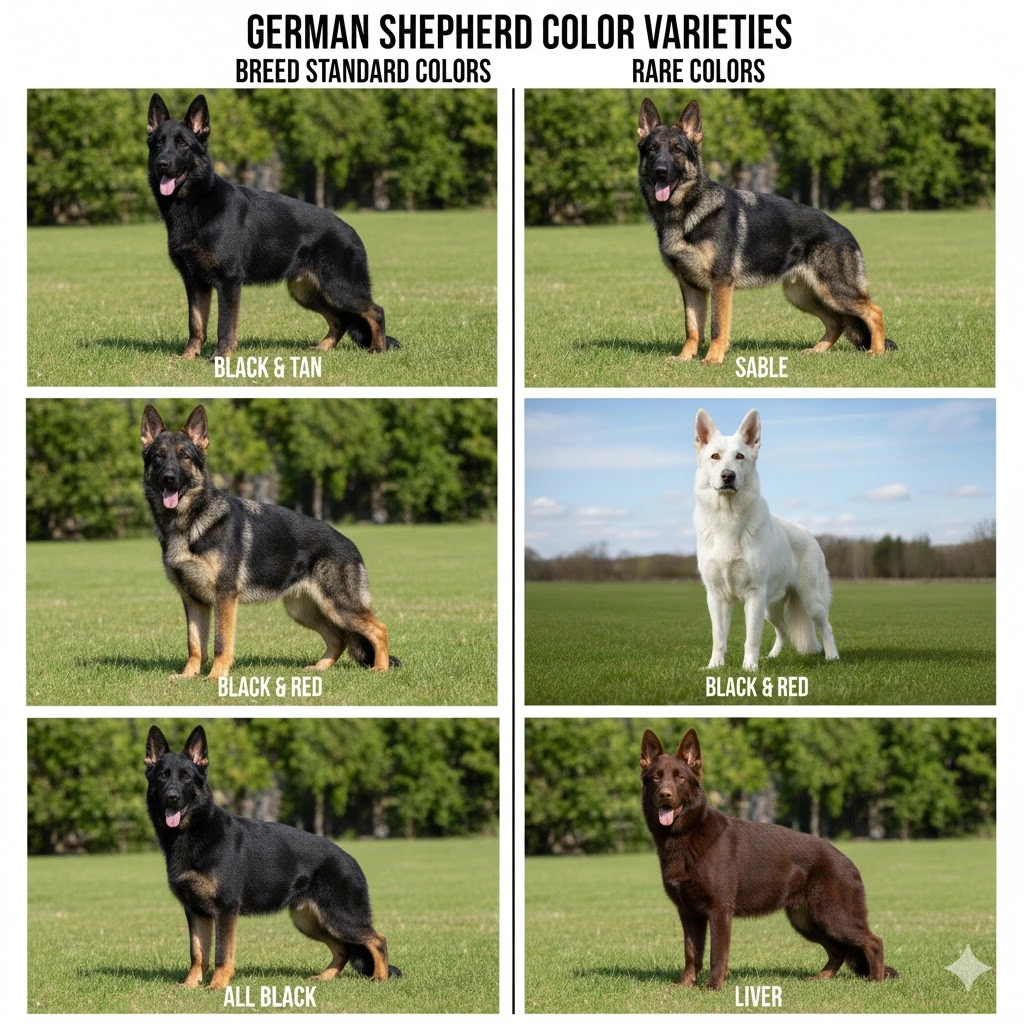
German_Shepherd_color_varieties showing_breed_standard_and_rare_colors"

If you’re selecting a GSD puppy, should color influence your decision?

When Color Matters

Personal preference:
If you have a strong aesthetic preference, that’s valid. You’ll live with your GSD for 10-12 years loving their appearance enhances your bond.

Show competition:
If you plan to show in conformation, stick to AKC-recognized colors (black and tan, black and red, sable, solid black, bicolor).

Breed preservation:
If breeding, follow breed standard guidelines and work with reputable mentors.

When Color Shouldn’t Matter

Health: Choose healthy parents and good genetics over color
Temperament: Select for temperament, not appearance
Working ability: If you need a working dog, ability trumps color
Overall quality: Structure, health testing, and breeder reputation matter more

Red Flags in Color-Based Breeding

Avoid breeders who:

  • Breed specifically for rare colors (blue, liver, panda) without health testing
  • Charge significantly more for “rare” colors
  • Focus on color over health, temperament, and structure
  • Make health claims based on color (“blue GSDs are healthier”)
  • Breed white GSDs specifically to avoid conformation standards

Reputable breeders:

  • Health test all breeding dogs
  • Breed for temperament and structure first
  • Produce various colors as natural genetic variation
  • Price puppies based on quality, not color
  • Follow breed standards

Color and the Breed Standard

Understanding what the AKC breed standard says about color helps explain why some colors are controversial.

AKC German Shepherd Breed Standard on Color

Acceptable colors:

  • Black and tan
  • Black and red
  • Sable
  • Solid black
  • Bicolor

Serious faults:

  • White (disqualification from conformation)
  • Blue
  • Liver

Pale, washed-out colors:
Considered undesirable but not disqualifying

Why Standards Matter

Breed standards preserve the German Shepherd’s original purpose, structure, and appearance. While some argue standards are too restrictive, they help maintain breed identity and consistency.

Performance vs. conformation:
A white, blue, or liver GSD can excel in obedience, agility, search and rescue, and be an amazing family dog—they just can’t compete in conformation shows.


Rare Color Pricing

Be aware of pricing tactics around rare colors.

What’s Fair

Normal variation:
Reputable breeders may charge similar prices for all colors or slightly more for less common colors like solid black or sable (due to supply and demand).

Price range:
$1,500-$3,500 from reputable breeders, regardless of color

Red Flags

Overpriced rare colors:
$5,000+ for blue, panda, or liver GSDs is often a red flag. High price doesn’t guarantee quality.

“Designer” marketing:
Terms like “rare blue,” “exotic panda,” or “premium white” often signal profit-driven breeding rather than breed preservation.

No health testing:
If a breeder charges premium prices but doesn’t health test (hips, elbows, genetics), walk away.


Caring for Different Coat Colors

All German Shepherd colors require similar care, with minor considerations.

General Coat Care (All Colors)

  • Brush 2-3 times weekly (daily during shedding season)
  • Bathe every 6-8 weeks or as needed
  • Use quality dog shampoo
  • Regular grooming maintains coat health

White GSDs

Special considerations:

  • Stains show more easily (tear stains, dirt)
  • May need more frequent bathing
  • Use whitening shampoo if desired (not necessary)

Myth: White coats don’t require special care beyond normal grooming

Dark Colors (Black, Dark Sable)

Sun exposure:
Dark coats can fade slightly in intense sun. Provide shade during peak hours.

Heat absorption:
Dark coats absorb more heat. Monitor for overheating in summer.


Final Thoughts

German Shepherd colors are wonderfully diverse, from the classic black and tan to striking solid black, rich sables, and rare whites. Each color has its own unique beauty and charm.

Luna’s sable coat taught me that the “traditional” GSD look is just one expression of this incredible breed. Her color shifts with the seasons and light, creating an ever-changing appearance that I never tire of.

If you’re choosing a German Shepherd, let color be a factor in your decision if it matters to you but its not the primary factor. Health, temperament, structure, and the breeder’s reputation should always come first. A well-bred, healthy, confident German Shepherd is beautiful regardless of color.

The best German Shepherd color is the one attached to a dog you’ll love for their entire life. Whether they’re black and tan, sable, white, or any variation in between, what matters is the bond you build and the life you share together.

💡 Choosing a German Shepherd puppy?
Learn about temperament, size differences, and what to look for in our complete breed selection guide.


More German Shepherd Breed Guides

  • German Shepherd Size Guide: Weight & Height by Age — Growth charts and size expectations
  • Male vs. Female German Shepherds: Which to Choose? — Temperament and size differences
  • Are German Shepherds Good Family Dogs? — Suitability and temperament guide

Explore all GSD breed facts →


Trusted Resources


Keywords: German Shepherd colors, GSD coat colors, black and tan German Shepherd, sable German Shepherd, white German Shepherd, German Shepherd color genetics


💬 What color is your German Shepherd? Share a photo in the comments—we’d love to see the beautiful variety of GSD colors in our community!

By Hazel Sloane

Wondering if your German Shepherd can have bananas? The answer is yes, but there’s a right way and a wrong way to share them. Plus, discover 15 other safe fruits and veggies your GSD can enjoy.

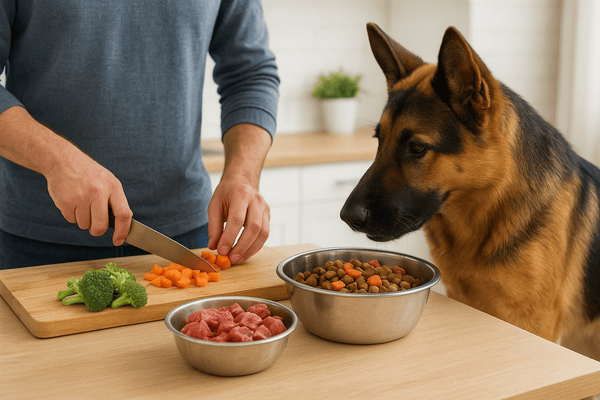
*Dog owner preparing healthy homemade food for German Shepherd with chicken, rice, and vegetables*

You’re peeling a banana in the kitchen, and suddenly your German Shepherd is at your feet, tail wagging, eyes locked on that yellow fruit like it’s the most fascinating thing they’ve ever seen.

Can you share a piece? Is it safe? Will it upset their stomach?

The short answer: Yes, German Shepherds can absolutely eat bananas. They’re not toxic, and in moderation, they can even be a healthy treat. But like most human foods, there are some guidelines you should follow to keep your GSD safe and healthy.

Let’s break down everything you need to know about feeding bananas to your German Shepherd—plus a bunch of other fruits and vegetables that make excellent, nutritious snacks.


Can German Shepherds Eat Bananas? The Quick Answer

Yes, bananas are safe for German Shepherds. They’re non-toxic, easy to digest, and packed with nutrients that can benefit your dog’s health.

Bananas contain:

  • Potassium (supports heart and muscle function)
  • Vitamin C (boosts immune health)
  • Vitamin B6 (helps with brain development and function)
  • Fiber (aids digestion)
  • Natural sugars (quick energy boost)

That said, bananas are also relatively high in sugar, which means they should be given as an occasional treat—not a daily staple. Too much banana can lead to weight gain, digestive upset, or blood sugar spikes, especially in less active dogs.

Hazel’s Tip:
I give my German Shepherds banana slices as high-value training treats or frozen banana chunks on hot summer days. They love them, and I love that I’m giving them something natural instead of processed snacks.


Health Benefits of Bananas for German Shepherds

When given in moderation, bananas can be a genuinely healthy addition to your GSD’s diet. Here’s what they bring to the table:

1. Natural Energy Boost

The natural sugars in bananas (fructose, glucose, and sucrose) provide quick energy. This makes bananas a great pre-walk or post-exercise snack for active German Shepherds.

2. Supports Digestive Health

Bananas are high in fiber, which can help regulate your dog’s digestive system. If your GSD occasionally has loose stools, a small amount of banana can help firm things up. On the flip side, too much fiber can cause constipation, so balance is key.

3. Heart and Muscle Function

Potassium is essential for heart health and proper muscle function. German Shepherds are active, muscular dogs, and potassium helps keep everything running smoothly.

4. Immune System Support

Vitamin C acts as an antioxidant, supporting your dog’s immune system and helping their body fight off illness and inflammation.

5. Low in Sodium and Cholesterol

Unlike many processed dog treats, bananas are naturally low in sodium and cholesterol, making them a heart-healthy option.


How to Safely Feed Bananas to Your German Shepherd

Just because bananas are safe doesn’t mean you should toss your GSD a whole one and call it a day. Here’s how to do it right:

Portion Size Matters

For an adult German Shepherd, a few slices of banana (about 1-2 inches of a medium banana) is plenty for one serving. Treats—including healthy ones like fruit—should make up no more than 10% of your dog’s daily calorie intake.

Sizing guide:

  • Puppies: 1-2 small slices
  • Adult GSDs: 3-5 slices
  • Senior dogs: 2-3 slices (especially if they’re less active)

Remove the Peel

Banana peels aren’t toxic, but they’re tough to digest and can cause blockages or stomach upset. Always peel the banana before offering it to your dog.

Serve Fresh or Frozen

Bananas can be served fresh, mashed, or frozen. Frozen banana slices make an excellent cooling treat on hot days, and many dogs love the texture.

Avoid Added Ingredients

Never give your German Shepherd banana bread, banana chips, or anything with added sugar, chocolate, or artificial sweeteners (especially xylitol, which is highly toxic to dogs). Plain, fresh banana only.

Introduce Slowly

If your GSD has never had banana before, start with a small piece and watch for any signs of digestive upset (diarrhea, vomiting, excessive gas). Most dogs tolerate bananas well, but it’s always smart to introduce new foods gradually.

can-gsd-eat-banana

When Bananas Are NOT a Good Idea

While bananas are generally safe, there are a few situations where you should skip them:

1. Your Dog Is Diabetic

Bananas are high in natural sugars, which can cause blood sugar spikes. If your German Shepherd has diabetes, consult your vet before offering fruit.

2. Your Dog Is Overweight

The sugar and calorie content in bananas can contribute to weight gain if given too frequently. If your GSD is already carrying extra pounds, opt for lower-calorie treats like green beans or cucumber.

3. Your Dog Has Kidney Issues

Bananas are high in potassium, which can be problematic for dogs with kidney disease. Always check with your vet if your dog has any chronic health conditions.

4. They’ve Already Had Too Many Treats

Remember the 10% rule. If your dog has already had training treats, table scraps, or other snacks that day, skip the banana to avoid overfeeding.


15 Safe Fruits & Vegetables for German Shepherds

Bananas aren’t the only human food your GSD can enjoy. Here are 15 other fruits and veggies that are safe, healthy, and often beloved by German Shepherds:

Fruits

1. Apples (without seeds or core)
Crunchy, hydrating, and full of fiber and vitamin C. Remove the core and seeds, as apple seeds contain small amounts of cyanide.

2. Blueberries
Packed with antioxidants and low in calories. These little berries are a perfect training treat.

3. Strawberries
High in fiber and vitamin C. Serve fresh and in moderation due to sugar content.

4. Watermelon (seedless, no rind)
Super hydrating and low in calories. Great for hot days. Remove all seeds and the rind.

5. Cantaloupe
High in vitamins A and C. Feed in small amounts due to sugar content.

6. Pineapple (fresh only)
Contains bromelain, an enzyme that may help with digestion. Remove the tough core and skin. Skip canned pineapple due to added sugar.

7. Mango (no pit or skin)
Rich in vitamins A, B6, C, and E. The pit is a choking hazard, so always remove it.

8. Pears (no seeds or core)
High in fiber and vitamin C. Remove seeds and core just like with apples.


Vegetables

9. Carrots
Crunchy, low-calorie, and great for dental health. Serve raw or cooked. My GSDs go crazy for frozen carrot sticks as a teething snack.

10. Green Beans
Low in calories and high in fiber. Plain, cooked, or raw green beans are excellent for weight management.

11. Sweet Potatoes (cooked, no seasoning)
Packed with fiber, vitamins A and C, and easy to digest. Never serve raw, as they can be hard on a dog’s stomach.

12. Cucumbers
Extremely low in calories and very hydrating. Perfect for overweight dogs or hot summer days.

13. Broccoli (in small amounts)
High in fiber and vitamin C, but too much can cause gas. Serve in moderation—no more than 10% of your dog’s diet.

14. Pumpkin (plain, canned or cooked)
Excellent for digestive health. Pure pumpkin (not pie filling) can help with both diarrhea and constipation.

15. Zucchini
Low-calorie, mild-flavored, and easy to digest. Serve raw or cooked without seasoning.

Hazel’s Tip:
I keep a bag of frozen blueberries and carrot sticks in the freezer at all times. They’re my go-to training rewards, and my GSDs think they’re getting something special every single time.


10 Toxic Foods to NEVER Feed Your German Shepherd

Just as important as knowing what’s safe is knowing what’s dangerous. Here are the most common toxic foods for dogs:

  1. Grapes and Raisins — Can cause sudden kidney failure, even in small amounts.
  2. Chocolate — Contains theobromine, which is toxic to dogs. Dark chocolate is the most dangerous.
  3. Onions and Garlic — Damages red blood cells and can cause anemia.
  4. Avocado — Contains persin, which can cause vomiting and diarrhea.
  5. Xylitol (artificial sweetener) — Found in sugar-free gum, candy, and peanut butter. Causes rapid insulin release and can be fatal.
  6. Macadamia Nuts — Can cause weakness, vomiting, tremors, and hyperthermia.
  7. Alcohol — Even small amounts can cause serious poisoning.
  8. Coffee and Caffeine — Contains stimulants that are dangerous for dogs.
  9. Raw Dough — Expands in the stomach and produces alcohol as it ferments.
  10. Cooked Bones — Splinter easily and can cause choking or internal damage.

If your German Shepherd eats any of these foods, contact your vet or the Pet Poison Helpline immediately.


Hazel’s Favorite Fruit Treats for GSDs

Over the years, I’ve learned which fruits my German Shepherds go absolutely wild for. Here are my top picks:

1. Frozen Blueberry Training Treats

I freeze fresh blueberries and use them as high-value rewards during training sessions. They’re small, low-calorie, and my dogs work just as hard for them as they would for processed treats.

2. Banana and Pumpkin “Pupsicles”

Blend banana and plain pumpkin with a little water, pour into ice cube trays, and freeze. Perfect for hot days or post-walk cool-downs.

3. Apple Slices with Peanut Butter (xylitol-free!)

Slice an apple, remove the core and seeds, and spread a thin layer of xylitol-free peanut butter on top. My GSDs lose their minds over this combo.

4. Watermelon Chunks

Simple, refreshing, and naturally hydrating. I cut watermelon into bite-sized chunks and serve them cold from the fridge.


How to Introduce New Foods Safely

Whenever you’re offering your German Shepherd a new fruit or vegetable, follow these steps to avoid any stomach upset:

1. Start Small

Offer just a tiny piece literally one small bite. Wait 24 hours to see how your dog’s body reacts.

2. Watch for Symptoms

Keep an eye out for:

  • Vomiting
  • Diarrhea
  • Excessive gas
  • Lethargy
  • Loss of appetite

If any of these occur, stop feeding that food and consult your vet if symptoms persist.

3. Gradually Increase

If your dog tolerates the food well, you can slowly increase the portion size over the next few days.

4. Keep a Food Journal

If your GSD has a sensitive stomach, keep a simple log of what you’ve fed them and how they responded. It’ll help you identify patterns and avoid problem foods.


Can Puppies Have Bananas?

Yes, German Shepherd puppies can have bananas, but in even smaller portions than adults. Start with one or two thin slices and watch how they handle it.

Puppies have sensitive digestive systems, and too much fruit can cause diarrhea. It’s better to use bananas as an occasional treat rather than a regular snack.

puppy-GSD

Final Thoughts

Bananas are a safe, nutritious, and delicious treat for German Shepherds when given in moderation. They’re packed with vitamins, easy to serve, and most dogs genuinely enjoy them.

But remember: treats should always be just that—treats. Your GSD’s main diet should come from high-quality, balanced dog food that meets their nutritional needs. Fruits and vegetables are fun additions, not replacements.

If you’re ever unsure whether a food is safe, check with your vet first. And when in doubt, skip it. There are plenty of dog-safe options out there to keep your German Shepherd happy, healthy, and well-fed.

Now go ahead share that banana slice. Your GSD will thank you.


Trusted Resources


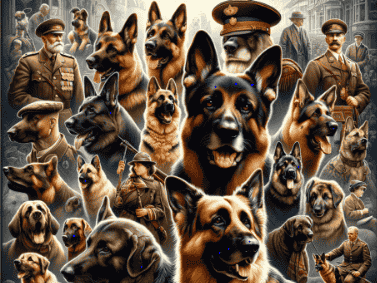
German Shepherds are more than just loyal companions they’re icons. Known for their intelligence, courage, and devotion, GSDs have left permanent marks on history, pop culture, law enforcement, and even wartime missions.

In this Shepzy guide, we’re celebrating seven legendary German Shepherds whose stories continue to inspire millions of dog lovers. If you’re a proud GSD parent (or future one), these tales will remind you why this breed is one of the most beloved in the world.

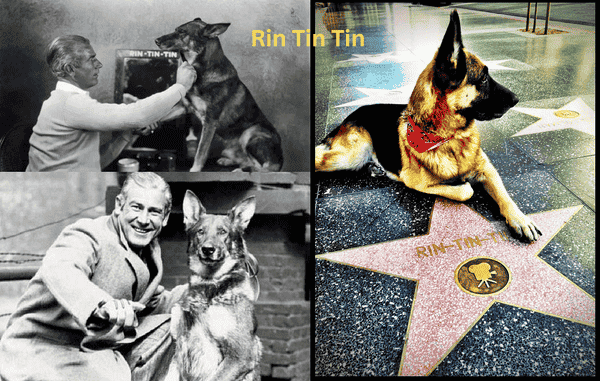
1. Rin Tin Tin — The German Shepherd That Saved Hollywood

Why Rin Tin Tin Is Legendary

  • He starred in over 25 Hollywood films.
  • His performances helped Warner Bros survive financial collapse in the 1920s.
  • Rumor says he received the most votes for the first Academy Award for Best Actor (though he was removed because he was a dog!).

Rin Tin Tin is the reason German Shepherds became one of America’s favorite dog breeds and the hero behind the rise of canine movies worldwide.

2. Strongheart — One of the First GSD Movie Stars

Before Rin Tin Tin, there was Strongheart, another rescued GSD turned actor. Born as “Etzel von Oeringen” in Germany, Strongheart was trained as a police dog before coming to the U.S. for a film career.

His Impact

  • Starred in several silent films including The Silent Call and White Fang.
  • Helped establish the “hero dog” genre in early cinema.
  • Became a beloved symbol of courage and strength.

Strongheart’s intense expressions and emotional performance style stunned audiences and showed the world what GSDs were capable of on screen.

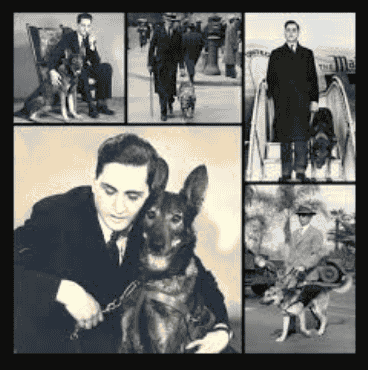
3. Buddy — The First Official Guide Dog in America

Buddy wasn’t just a German Shepherd she was the pioneer who changed the lives of thousands of visually impaired people.

In 1928, a young blind man named Morris Frank traveled to Switzerland to be paired with the first American-trained guide dog. The dog’s name was Buddy.

Why Buddy Is Unforgettable

  • She became the first guide dog in the U.S., leading the way for modern guide-dog programs.
  • Buddy and Morris Frank co-founded The Seeing Eye, the first guide-dog school in North America.
  • Her calmness, intelligence, and trainability set the gold standard for future guide dogs.

Buddy proved German Shepherds could not only protect and serve but also guide, comfort, and transform human lives.

Buddy

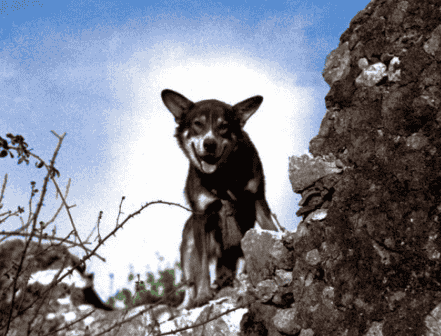
4. Chips — The Most Decorated War Dog in U.S. Military History

Chips, a mixed German Shepherd Collie Husky, served during World War II and became one of the most decorated military dogs in American history.

His Heroic Feats

  • Participated in Operation Husky (the invasion of Sicily).
  • Single-pawedly attacked an enemy machine-gun nest, forcing four soldiers to surrender.
  • Saved U.S. troops during multiple surprise attacks.

For his bravery, Chips was awarded:

  • The Distinguished Service Cross
  • The Silver Star
  • The Purple Heart

Though the military later revoked animal medals, Chips remains a symbol of courage, loyalty, and selfless service.

Chips

5. Apollo — The 9/11 Search-and-Rescue Hero

No list is complete without Apollo, one of the first K-9 responders at the World Trade Center after the 9/11 attacks.

Apollo’s Legacy

  • Arrived at Ground Zero 15 minutes after the collapse.
  • Rescued survivors and located victims under dangerous conditions.
  • Nearly lost his life when falling debris struck but continued working after a quick check by his handler.

Apollo and other search-and-rescue GSDs became symbols of hope during one of the darkest moments in history. He was honored with the Dickin Award (the animal equivalent of the Victoria Cross).

6. Finn — The Police Dog Who Changed UK Law

Finn was a police German Shepherd in the UK who became famous after surviving a brutal knife attack while protecting his handler.

What Finn Achieved

  • His story led to the creation of Finn’s Law, which gives police dogs and horses stronger legal protection from harm.
  • Finn recovered from severe injuries and continued supporting police outreach programs.
  • He also became a finalist on Britain’s Got Talent stealing hearts nationwide.

Finn proved that GSDs aren’t just working dogs; they’re partners who put their lives on the line.

7. Max — The Family Dog Who Saved a Boy’s Life

Max’s Heroism

  • Threw himself between the child and the snake.
  • Took the bites himself but survived thanks to quick medical care.
  • Became a global symbol of the German Shepherd’s loyalty and protective nature.

Stories like Max’s remind us that sometimes the greatest heroes are family pets driven by pure love.

Why German Shepherds Continue to Make History

From film sets to battlefields, disaster zones to family homes, German Shepherds stand out for:

  • Intelligence (one of the top 3 smartest breeds)
  • Trainability (police, service, protection, therapy GSDs can do it all)
  • Courage & loyalty
  • Emotional sensitivity
  • Incredible work ethic

This unique combination allows them to rise to extraordinary moments and leave a lasting impact on the world.

Final Thoughts: The Legacy Lives On

These seven German Shepherds didn’t just make history they shaped cultures, saved lives, changed laws, and captured hearts across generations.

Whether your GSD is a couch cuddler, a backyard explorer, or a trained working partner, remember this:

Every German Shepherd carries the same spirit that made these legendary dogs unforgettable.

So give your GSD an extra hug today they may not know they come from a line of heroes, but they definitely act like it.