

By Hazel Sloane
Everything German Shepherd owners need to know about hip dysplasia—from early warning signs to prevention strategies and treatment options that actually work.
When my German Shepherd Luna was two years old, I noticed something that made my heart sink. She hesitated before jumping into the car—something she’d always done eagerly. A few weeks later, she started “bunny hopping” when she ran, using both back legs together instead of alternating.
I knew what it might be, but I didn’t want to believe it. Hip dysplasia. The condition so many German Shepherd owners dread.
After X-rays confirmed mild hip dysplasia, my vet and I created a management plan that changed everything. Today, at seven years old, Luna moves comfortably, plays enthusiastically, and shows no signs of pain. Early detection and proactive management made all the difference.
Hip dysplasia is one of the most common orthopedic conditions in German Shepherds, but it’s not a death sentence. With the right knowledge and approach, many dogs with hip dysplasia live full, active, comfortable lives.
Here’s everything you need to know to protect your German Shepherd—or manage their condition if they’ve already been diagnosed.
What Is Hip Dysplasia?

Hip dysplasia is a developmental condition where the hip joint doesn’t form properly. In a healthy hip, the ball (femoral head) fits snugly into the socket (acetabulum), creating a smooth, stable joint that allows pain-free movement.
In a dysplastic hip, the ball and socket don’t fit together correctly. The joint is loose and unstable, causing:
Abnormal wear and tear — The poorly fitted joint rubs incorrectly, damaging cartilage over time
Inflammation — The body responds to this abnormal motion with inflammation and pain
Arthritis — Chronic inflammation leads to degenerative joint disease (osteoarthritis)
Progressive deterioration — Without intervention, the condition typically worsens as the dog ages
Why German Shepherds Are Particularly Affected
Hip dysplasia has a strong genetic component, and German Shepherds are one of the breeds most commonly affected. Studies show that approximately 20% of German Shepherds have some degree of hip dysplasia.
Why GSDs are vulnerable:
Rapid growth — German Shepherds grow quickly, and rapid skeletal development can contribute to improper joint formation
Large breed structure — The physical demands on larger, heavier dogs put more stress on developing joints
Genetic predisposition — If a GSD’s parents had hip dysplasia, their offspring are at significantly higher risk
Breeding practices — Not all breeders screen for hip dysplasia, allowing affected dogs to pass the condition to their puppies
The good news? Responsible breeding, early detection, and proactive management can dramatically improve outcomes.
Types and Severity of Hip Dysplasia
Hip dysplasia isn’t a one-size-fits-all condition. It exists on a spectrum from very mild to severe.
OFA Grading System
The Orthopedic Foundation for Animals (OFA) uses this grading system:
Excellent — Superior hips with a deep socket and tight fit
Good — Normal hips with minor imperfections
Fair — Borderline normal, may have slight laxity
Borderline — Neither normal nor dysplastic (recheck recommended)
Mild dysplasia — Some looseness, early arthritic changes may be present
Moderate dysplasia — Significant looseness, clear arthritic changes
Severe dysplasia — Marked looseness, extensive arthritic changes, possibly a flat or shallow socket
PennHIP Scoring
Another evaluation method measures joint laxity (looseness) using a distraction index:
- 0.30 or less — Tight hips, low risk
- 0.30-0.50 — Mild laxity, moderate risk
- 0.50-0.70 — Moderate laxity, higher risk
- 0.70+ — Severe laxity, very high risk for arthritis
Important to understand: A dog can have hip dysplasia but never show symptoms, while another with mild dysplasia may be significantly affected. Severity of X-ray findings doesn’t always correlate with pain levels.
Early Warning Signs of Hip Dysplasia

Catching hip dysplasia early gives you the best chance of slowing progression and managing pain. Here’s what to watch for:
Puppies and Young Dogs (6 months – 2 years)
Difficulty rising — Takes extra time or effort to stand up from lying down
Bunny hopping — Uses both back legs together when running instead of alternating
Decreased activity — Less interest in running or playing
Reluctance to jump — Hesitates before jumping into cars, onto furniture, or up stairs
Narrow stance — Stands with back legs closer together than normal
Swaying gait — Hips rock side to side when walking
Sitting abnormally — Sits with legs to the side (frog sitting) instead of squared up
Loss of muscle mass — Rear leg muscles appear smaller or less defined
Adult Dogs (2+ years)
In addition to the above signs:
Stiffness after rest — Especially noticeable after waking up or after exercise
Difficulty on stairs — Struggles going up or down stairs
Limping or favoring a leg — May shift weight off the affected hip
Audible clicking — Hearing a clicking sound when the dog moves
Decreased range of motion — Reluctance to extend the hind legs fully
Behavioral changes — Irritability, reluctance to be touched around the hips, or aggression when the area is handled
Hazel’s Experience:
Luna’s first sign was so subtle I almost missed it—she started lying down while eating instead of standing. At the time, I thought it was quirky. Looking back, she was already compensating for discomfort.
What Causes Hip Dysplasia?
Hip dysplasia is multifactorial, meaning multiple factors contribute to its development.
Genetics (Primary Factor)
Hereditary component — Hip dysplasia is highly heritable. If both parents have dysplastic hips, puppies have a much higher risk.
Why breeding matters — Responsible breeders screen breeding dogs for hip health using OFA or PennHIP evaluations. Breeding only dogs with good or excellent hips significantly reduces risk in offspring.
Not always predictable — Even two dogs with excellent hips can occasionally produce puppies with hip dysplasia, though the risk is much lower.
Environmental Factors
While genetics load the gun, environment pulls the trigger:
Rapid growth — Overfeeding puppies or feeding high-calorie food causes faster growth, which stresses developing joints
Exercise during growth — Too much high-impact exercise (jumping, running on hard surfaces, stairs) during the critical growth period (under 18 months) can worsen joint formation
Obesity — Extra weight puts excessive stress on joints throughout life, accelerating degeneration
Injury — Trauma to the hip during development can contribute to improper joint formation
Nutrition — Imbalanced calcium/phosphorus ratios or over-supplementation can affect skeletal development
How Hip Dysplasia Is Diagnosed
If you suspect hip dysplasia, your veterinarian will use several methods to diagnose and evaluate severity.
Physical Examination
Palpation — Your vet will manipulate the hip joint, feeling for looseness, clicking, or pain
Ortolani test — A specific manipulation that checks for hip laxity. A positive result (clicking) indicates looseness in the joint
Range of motion — Assessing how far the hip can extend and flex
Muscle evaluation — Checking for atrophy (muscle loss) in the rear legs
X-Rays (Radiographs)
The gold standard for diagnosing hip dysplasia. X-rays show:
- Shape of the hip socket
- How well the ball fits into the socket
- Presence of arthritis or bone changes
- Overall joint structure
Sedation required — Dogs must be sedated or anesthetized for proper positioning to get accurate images
OFA evaluation — X-rays can be submitted to OFA for official grading (dogs must be at least 2 years old for permanent certification)
PennHIP evaluation — Requires special training and technique, but can be done as early as 16 weeks
When to Screen
Early screening (16 weeks – 6 months) — If you want to assess risk early, PennHIP can identify hip laxity
OFA preliminary (under 2 years) — Gives an idea of hip health but isn’t a permanent certification
OFA final (2+ years) — Official certification that hips are fully mature
If symptoms appear — Any time your dog shows signs of hip problems, regardless of age
Prevention Strategies for Puppies
You can’t change genetics, but you can control environmental factors that influence hip development.

Choose a Responsible Breeder
OFA/PennHIP certification — Both parents should have good or excellent hip scores
Multi-generational health — Ask about grandparents and siblings
Health guarantees — Reputable breeders offer health guarantees and will take dogs back if issues arise
Transparency — Good breeders willingly share health clearances
Nutrition for Growing Puppies
Large breed puppy food — Formulated to support controlled growth with appropriate calcium/phosphorus ratios
Don’t overfeed — Follow feeding guidelines and adjust based on body condition, not the puppy’s appetite
Avoid supplements — Large breed puppy foods already contain proper nutrient ratios. Extra calcium can harm developing bones
Keep them lean — Puppies should be slim with easily felt ribs. Chubby puppies face higher joint disease risk.
Appropriate Exercise During Growth
What’s safe:
- Controlled leash walks (5 minutes per month of age, twice daily)
- Free play on soft surfaces (grass, sand)
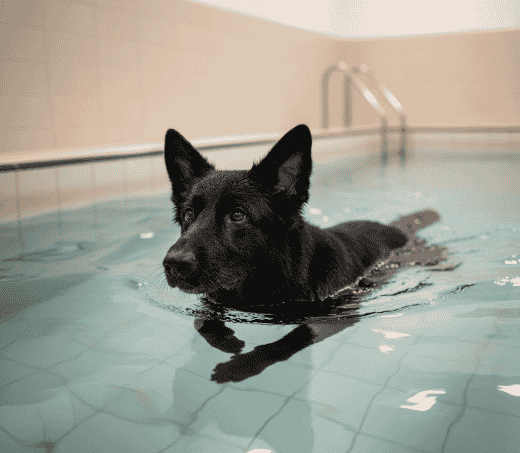
- Swimming (excellent low-impact exercise)
- Gentle socialization
What to avoid:
- Repetitive jumping (on/off furniture, catching frisbees)
- Running on concrete or pavement
- Stair climbing (limit significantly)
- Forced exercise (jogging, biking) before 18 months
- Rough play with much larger dogs
The goal: Let puppies play naturally but avoid high-impact, repetitive stress on growing joints.
Weight Management
Maintain ideal body condition throughout life:
- Ribs easily felt but not visible
- Clear waist when viewed from above
- Abdominal tuck when viewed from the side
Every extra pound matters — Studies show that even mild overweight increases arthritis risk and severity.
Treatment Options for Hip Dysplasia
Treatment depends on severity, the dog’s age, activity level, and pain levels. Most cases are managed conservatively, but severe cases may require surgery.
Conservative (Non-Surgical) Management
Most German Shepherds with mild to moderate hip dysplasia are managed successfully without surgery.
Weight management — This is the single most important factor. Keeping your GSD lean reduces joint stress dramatically.
Controlled exercise — Regular, moderate exercise maintains muscle strength and joint flexibility without causing additional damage.
Physical therapy — Structured exercises, underwater treadmill, therapeutic massage, and stretching improve mobility and reduce pain.
Joint supplements:
Glucosamine and chondroitin — Support cartilage health and may slow degeneration
Omega-3 fatty acids (fish oil) — Reduce inflammation and support joint health
MSM — Natural anti-inflammatory properties
Start supplements early — They work best as prevention rather than treatment after severe arthritis develops
Learn more about the best supplements for German Shepherd joint health
Pain management medication:
NSAIDs (Non-steroidal anti-inflammatory drugs) — Carprofen (Rimadyl), meloxicam (Metacam), deracoxib (Deramaxx)
Gabapentin — For nerve pain associated with arthritis
Adequan injections — Injectable joint protectant that can slow cartilage breakdown
Always under veterinary supervision — Pain medications require monitoring for side effects
Alternative therapies:
Acupuncture — Many dogs respond well to acupuncture for pain management
Laser therapy — Reduces inflammation and pain
Chiropractic care — Can help with compensation issues from altered gait
CBD oil — Some owners report benefits, though research is still emerging (discuss with your vet)

Surgical Options
Surgery is considered for dogs with severe hip dysplasia, young dogs with significant laxity, or those who don’t respond to conservative management.
Juvenile Pubic Symphysiodesis (JPS)
When: Puppies under 20 weeks old
How it works: Alters pelvic growth to improve hip socket depth
Best for: Very young puppies with early-detected laxity
Success rate: High when done at the right age
Double or Triple Pelvic Osteotomy (DPO/TPO)
When: Young dogs (under 10 months) before arthritis develops
How it works: Cuts and rotates pelvic bones to improve socket coverage of the ball
Best for: Young dogs with hip laxity but minimal arthritis
Recovery: 8-12 weeks
Femoral Head Ostectomy (FHO)
When: Any age, especially smaller GSDs or when other options aren’t viable
How it works: Removes the ball of the hip joint; body forms a “false joint” with scar tissue
Best for: Dogs under 50 pounds, severe pain, or as salvage procedure
Pros: Less expensive than total hip replacement, good pain relief
Cons: Not ideal for large, active dogs; range of motion may be limited
Total Hip Replacement (THR)
When: Mature dogs (over 1 year, ideally 18+ months) with severe arthritis
How it works: Replaces the entire hip joint with artificial components
Best for: Large, active dogs with severe hip dysplasia
Pros: Most complete solution; dogs often return to near-normal function
Cons: Most expensive option ($3,000-7,000 per hip); risk of complications; requires strict recovery protocol
Success rate: Very high (90%+) when done by experienced orthopedic surgeons
Hazel’s Perspective:
For Luna, we went the conservative route—weight management, daily supplements, controlled exercise, and NSAIDs as needed during flare-ups. She’s thrived with this approach. But I have friends whose GSDs needed surgery, and they’re also doing wonderfully. The right choice depends entirely on your individual dog.
Living with a Dog with Hip Dysplasia
If your German Shepherd has been diagnosed with hip dysplasia, daily management strategies can maintain quality of life for years.
Home Modifications
Ramps — Use ramps for getting in and out of cars, onto beds, or furniture
Non-slip surfaces — Rugs, yoga mats, or runners on slippery floors prevent falls
Raised food and water bowls — Reduces strain when eating and drinking
Orthopedic dog bed — Supportive memory foam bed reduces pressure on joints
Avoid stairs when possible — If stairs are unavoidable, consider a support harness.

Exercise Guidelines
Low-impact activities:
- Swimming (best exercise for hip dysplasia)
- Controlled leash walks on soft surfaces
- Gentle fetch on grass
- Slow-paced hiking on even terrain
Avoid:
- Jumping
- Rough play with other dogs
- Running on hard surfaces
- Long hikes or runs
- Anything that causes limping or stiffness
Warm-up and cool-down — Gentle walking before and after exercise helps prevent stiffness
Consistency — Regular moderate exercise is better than weekend warrior activity
Pain Management
Watch for signs of discomfort:
- Reluctance to move
- Stiffness after rest
- Limping
- Decreased appetite
- Changes in behavior (irritability, withdrawal)
When to medicate:
- Before anticipated activity (walks, vet visits)
- During weather changes (many dogs with arthritis are sensitive to cold, damp weather)
- When signs of pain appear
Don’t wait until pain is severe — Proactive pain management keeps dogs more comfortable and active
Long-Term Prognosis
The outlook for German Shepherds with hip dysplasia varies widely depending on severity and management.
Mild Hip Dysplasia
Prognosis: Excellent with proper management
Many dogs live normal lifespans with minimal symptoms
Key factors: Maintain ideal weight, regular exercise, joint supplements, pain management as needed
Moderate Hip Dysplasia
Prognosis: Good to fair with conservative management or surgery
Arthritis will likely develop but can be managed effectively
Quality of life: Most dogs remain comfortable with proper care
Severe Hip Dysplasia
Prognosis: Fair; often requires surgery for best outcome
Without surgery: Chronic pain likely, mobility significantly impaired
With surgery (THR): Many dogs return to near-normal function
The bottom line: Hip dysplasia is manageable. With proper care, most German Shepherds with hip dysplasia live happy, comfortable lives.
Common Questions About Hip Dysplasia
Can hip dysplasia be cured?
No, hip dysplasia cannot be cured—it’s a structural problem with how the joint formed. However, it can be managed effectively, and in some cases, surgery (like total hip replacement) can restore near-normal function.
At what age does hip dysplasia appear?
Signs can appear as early as 5-6 months, though many dogs don’t show symptoms until 1-2 years old. Some dogs with mild dysplasia never show symptoms at all.
Should I still exercise my dog with hip dysplasia?
Yes! Controlled, low-impact exercise is essential. It maintains muscle strength, which supports the joint, and prevents obesity. Swimming is ideal.
Will my dog need surgery?
Most dogs with hip dysplasia are managed conservatively without surgery. Surgery is typically reserved for severe cases or when conservative management isn’t providing adequate pain relief.
Can diet help hip dysplasia?
Diet can’t reverse hip dysplasia, but maintaining a lean body weight is the most important thing you can do to reduce joint stress. Joint supplements (glucosamine, fish oil) may also help slow progression.
Should I breed a dog with hip dysplasia?
No. Hip dysplasia is highly heritable. Breeding dogs with dysplastic hips passes the condition to offspring and perpetuates the problem in the breed.
Final Thoughts
Hip dysplasia is scary when you first hear the diagnosis. I remember sitting in my vet’s office, looking at Luna’s X-rays, feeling like I’d failed her somehow.
But here’s what I learned: hip dysplasia isn’t the end of your dog’s active, happy life. It’s a condition that requires management, attention, and care—but German Shepherds are resilient, and with the right approach, they adapt beautifully.
Luna taught me that. She doesn’t know she has hip dysplasia. She knows she loves swimming, gentle walks in the woods, and chasing tennis balls on the grass. She knows she’s comfortable, loved, and living her best life.
That’s what proper management gives you—not a cure, but a life full of joy, movement, and comfort.
If your German Shepherd has been diagnosed with hip dysplasia, you’re not alone. Thousands of GSD owners are walking this same path, and with knowledge, proactive care, and a good partnership with your vet, your dog can thrive.
Want to support your GSD’s joint health from the start?
Check out our guide to the Best Supplements for German Shepherds—including glucosamine, fish oil, and joint-support formulas that actually work.
More German Shepherd Health Guides
- German Shepherd Food Guide: Balancing Homemade & Store-Bought Meals — Nutrition for joint health
- German Shepherd Exercise Requirements by Age — Safe activity levels
- GSD Skin Allergies: Complete Guide — Managing another common GSD health issue
Explore all our GSD health resources →
Trusted Resources
- Orthopedic Foundation for Animals (OFA) — Hip Dysplasia
- American College of Veterinary Surgeons — Canine Hip Dysplasia
- VCA Animal Hospitals — Hip Dysplasia in Dogs
Has your German Shepherd been diagnosed with hip dysplasia? What management strategies have worked best for you? Share your experience in the comments to help other GSD owners navigating this journey.