


By Hazel Sloane
Discover the only toys that survive German Shepherds’ powerful jaws—from indestructible chew toys to mind-challenging puzzles that actually keep your GSD engaged.
I’ve spent more money on destroyed dog toys than I care to admit. In Luna’s first year alone, I must have thrown away two dozen toys—shredded plush animals, demolished rubber balls, and rope toys that became dangerous strings within hours.
The breaking point came when Luna swallowed a chunk of a “heavy-duty” toy that required an emergency vet visit and $800 surgery to remove. That’s when I learned the hard way: German Shepherds don’t need just any toys. They need toys specifically designed to withstand their intelligence, jaw power, and relentless determination.
After years of trial and error (and a lot of wasted money), I’ve finally figured out which toys actually survive my GSDs and more importantly, which ones keep them mentally stimulated, physically exercised, and safely entertained.
Here’s everything you need to know about choosing toys that won’t end up in the trash within a week.
Why German Shepherds Need Special Toys
German Shepherds aren’t your average dogs, and they destroy toys for very specific reasons.
They’re Incredibly Intelligent
With intelligence comparable to a 2-3 year old child, German Shepherds get bored easily. A simple squeaky toy might entertain a less intelligent breed for hours, but your GSD will figure it out in five minutes and move on to destroying it.
What this means for toys: You need toys that challenge their minds—puzzles, interactive games, and toys that require problem-solving.
They Have Crushing Jaw Strength
German Shepherds have a bite force of approximately 238 PSI (pounds per square inch). That’s enough to crush most “durable” toys marketed to regular dogs.
What this means for toys: Only industrial-strength materials survive. If a toy is marketed for “all dogs,” it probably won’t last a week with a GSD.
Working Breed Instincts Run Deep
Even family-pet German Shepherds retain strong working instincts. They need jobs, tasks, and activities that engage their natural drive to work and problem-solve.
What this means for toys: Fetch toys, tug toys, and interactive puzzles satisfy their need to work and accomplish tasks.
High Energy Levels Demand Outlets
An under-stimulated German Shepherd will find their own entertainment—and you won’t like their choices. Chewed furniture, destroyed shoes, and dug-up yards are all symptoms of a bored GSD.
What this means for toys: You need a variety of toys that provide both physical exercise and mental exhaustion.
The Real Cost of Cheap Toys
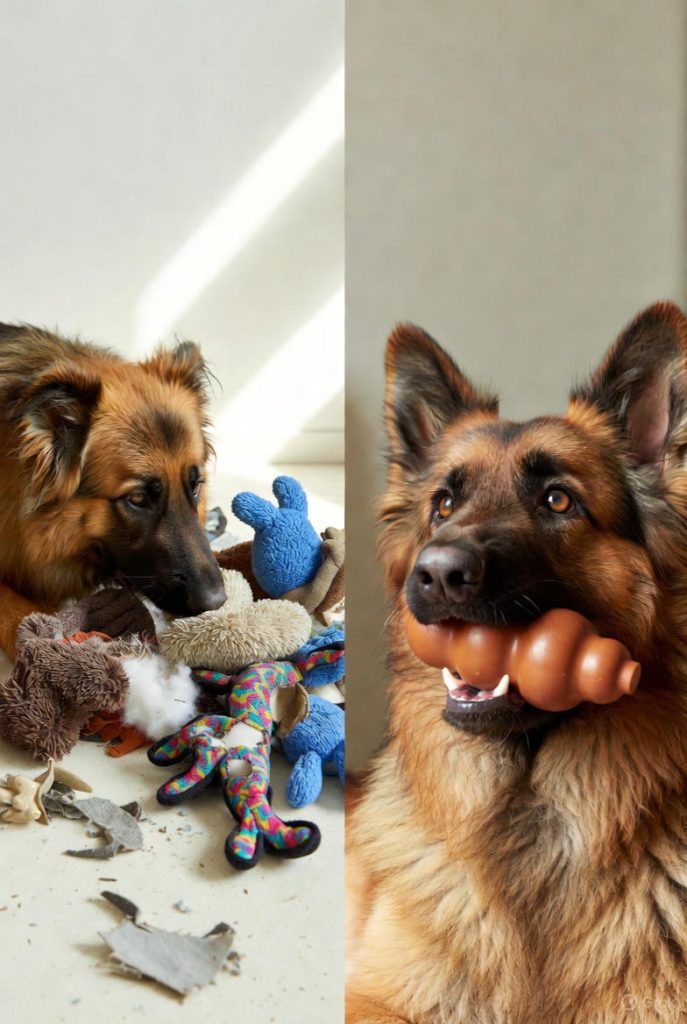
Here’s what I wish someone had told me from the start: cheap toys don’t save money. They cost more in the long run because:
- You’re constantly replacing them
- Destroyed toys create choking and blockage hazards
- Emergency vet visits cost thousands
- Your dog learns that destroying toys is the goal
Hazel’s Reality Check:
One $30 Kong has lasted Luna three years. Twenty $5 toys lasted a combined two weeks. Do the math.
Types of Toys Every German Shepherd Needs
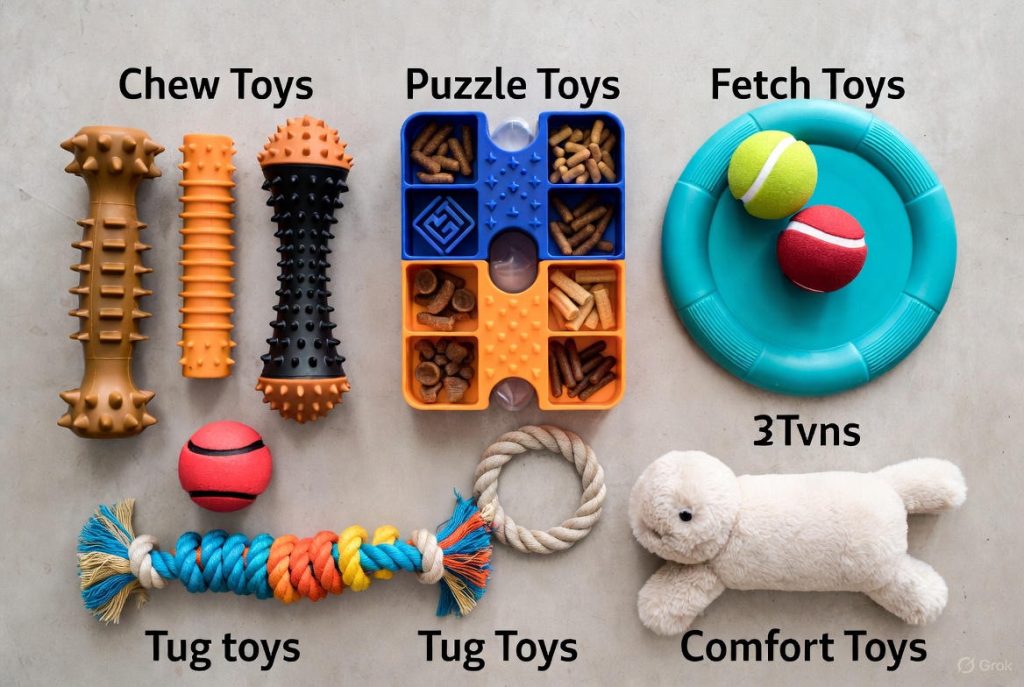
A well-rounded toy collection addresses different needs throughout your GSD’s day.
Chew Toys
Purpose: Satisfy natural chewing instinct, occupy alone time, support dental health
Best for: Crate training, when you can’t supervise, calming anxiety
Interactive Puzzle Toys
Purpose: Mental stimulation, slow feeding, problem-solving engagement
Best for: Preventing boredom, rainy days, mental exhaustion
Fetch Toys
Purpose: Physical exercise, bonding time, burning energy
Best for: Outdoor play, training recall, building relationship
Tug Toys
Purpose: Strength building, interactive play, teaching impulse control
Best for: Bonding time, training “drop it,” high-energy play sessions
Comfort Toys
Purpose: Anxiety relief, companionship, calming presence
Best for: Crate time, separation anxiety, nighttime settling
Why variety matters:
Just like you’d get bored eating the same meal every day, your GSD needs different types of engagement. Rotate toys to keep interest high and address different needs throughout the day.
Best Indestructible Chew Toys for German Shepherds
These are the only chew toys that have survived my power-chewer GSDs long-term.
Quick Comparison: Top Indestructible Chew Toys
| Toy | Durability | Best For | Price Range | Dishwasher Safe |
|---|---|---|---|---|
| Kong Extreme | Excellent | Stuffing, freezing | $15-25 | Yes |
| Benebone Wishbone | Very Good | Long chew sessions | $10-20 | No |
| West Paw Hurley | Excellent | Water play, fetch | $15-30 | Yes |
| Goughnuts MaXX | Outstanding | Extreme chewers | $30-40 | Yes |
| Elk Antlers | Excellent | Natural chewers | $15-35 | N/A |

1. Kong Extreme (Black)
Why it’s indestructible:
Made from ultra-durable black rubber specifically formulated for power chewers, the Kong Extreme is virtually impossible to destroy. I’ve had the same Kong for three years with Luna, and it still looks nearly new.
How to use it:
- Stuff with peanut butter, kibble, or treats
- Freeze for longer-lasting engagement (Luna’s frozen Kongs keep her busy for 45+ minutes)
- Use during crate training or alone time
- Varies in size – choose large or XL for adult GSDs
Best for: Heavy chewers, anxiety management, crate training, keeping dogs occupied when you can’t supervise
Hazel’s Tip:
My go-to Kong recipe: Layer kibble, peanut butter, mashed banana, more kibble, then seal the small opening with a bit of cheese. Freeze overnight. This keeps Luna entertained for nearly an hour.
Price: $15-25 depending on size

2. Benebone Wishbone
Why it’s durable:
Made from super-strong nylon infused with real flavors (bacon, chicken, peanut butter), Benebones are designed specifically for aggressive chewers. The wishbone shape makes it easy for dogs to grip.
How to use it:
- Let your dog chew in supervised sessions
- Replace when significantly worn down
- Choose flavor based on your dog’s preferences
- Ergonomic design — they can hold it with paws while chewing
Best for: Dogs who need long-lasting chew satisfaction, aggressive chewers who go through regular toys in minutes
Important note: These are meant for chewing, not eating. Supervise initially to ensure your dog isn’t trying to swallow large pieces.
Price: $10-20
3. West Paw Zogoflex Hurley
Why it works:
USA-made from Zogoflex material that’s FDA-compliant, non-toxic, and backed by West Paw’s guarantee. If your dog destroys it, they’ll replace it. The material is also buoyant, making it perfect for water play.
How to use it:
- Fetch on land or in water
- Toss it for your GSD to chase and retrieve
- Dishwasher safe for easy cleaning
- Floats for lake or pool play
Best for: Active GSDs who love fetch, dogs who play rough, water-loving dogs
Bonus: Comes in bright colors for high visibility
Price: $15-30 depending on size
4. Goughnuts MaXX Ring
Why it’s the toughest:
Goughnuts are made from industrial-strength rubber with a unique safety feature is a red inner core. If you ever see red showing through, it’s time to replace the toy (and Goughnuts will replace it for free). The MaXX line is specifically for the most powerful chewers.
How to use it:
- Tug play
- Solo chewing
- Fetch (it has good bounce)
- Check regularly for red indicator
Best for: The absolute most aggressive chewers, dogs who’ve destroyed every other “indestructible” toy
Important: These are not cheap, but they last years. If you’ve wasted money on destroyed toys, this is worth the investment.
Price: $30-40
5. Elk or Deer Antlers (Natural Chews)
Why they last:
Natural antlers are incredibly dense and long-lasting. A single elk antler can provide weeks or even months of chewing satisfaction for most GSDs.
How to choose and use:
- Choose split antlers (easier to chew, less tooth fracture risk)
- Size matters—choose larger antlers for adult GSDs
- Supervise initially to ensure appropriate chewing
- Remove when worn down to a small nub
Best for: Natural chewing satisfaction, dogs who like the texture and taste of natural products, long-lasting chewing
Safety considerations:
- Never give cooked bones (they splinter)
- Watch for aggressive chewers who might crack teeth on whole antlers
- Some dogs aren’t interested — it’s a personal preference thing
Hazel’s Experience:
Luna loves split elk antlers. One large antler lasts her about 2-3 months. Not all dogs love them, though—my previous GSD wasn’t interested at all.
Price: $15-35 depending on size
What to AVOID: Dangerous Chew Toys
Rawhide
- Can cause choking or intestinal blockages
- Often treated with harmful chemicals
- Swells in the stomach
Cooked Bones
- Splinter and cause internal damage
- Can puncture intestines
- Tooth fracture risk
Cheap Plush Toys
- Stuffing causes blockages if swallowed
- Squeakers are choking hazards
- Fall apart within minutes with power chewers
Tennis Balls (for heavy use)
- Abrasive surface wears down tooth enamel
- Can be torn apart and swallowed
- Fine for occasional fetch but not daily chewing
Best Interactive Puzzle Toys for Mental Stimulation

Here’s a secret many GSD owners don’t realize: 15 minutes of mental work exhausts your dog as much as 30 minutes of physical exercise.
Puzzle toys aren’t just entertainment—they’re essential for preventing destructive behavior caused by boredom and under-stimulation.
1. Outward Hound Hide-A-Squirrel (Beginner Level)
How it works:
A plush tree trunk with holes and several squeaky squirrels. Dogs pull the squirrels out of the trunk, and you can hide them again for repeated play.
Why GSDs love it:
It engages their prey drive and problem-solving skills without being too frustrating for beginners.
Difficulty levels:
Comes in different sizes (small trunk with 3 squirrels up to jumbo with 6+ squirrels)
Best for: Dogs new to puzzle toys, building confidence, teaching problem-solving
Durability note: The plush won’t survive aggressive chewing, but for puzzle play (not chewing), it holds up well. I’ve had ours for over a year.
Price: $15-30
2. Nina Ottosson Dog Brick (Intermediate Level)
How it works:
Sliding compartments and flip lids hide treats. Dogs must slide blocks and flip covers to reveal rewards.
Why it’s perfect for GSDs:
Multiple difficulty levels in one toy. Start easy with treats visible, then increase challenge by hiding treats under multiple layers.
Features:
- Dishwasher safe
- Durable plastic construction
- BPA-free materials
Best for: Smart dogs ready for a challenge, mealtime enrichment (use kibble), keeping dogs engaged for 15-20 minutes
Hazel’s Strategy:
I use the Dog Brick with Luna’s breakfast kibble 2-3 times per week. It slows down eating and makes mealtime mentally engaging.
Price: $20-35
3. KONG Wobbler
How it works:
A weighted, egg-shaped toy that wobbles and dispenses treats or kibble as your dog pushes it around.
Why GSDs love it:
Combines physical activity with problem-solving. They have to figure out how to make it dispense food.
Benefits:
- Slows down fast eaters
- Good physical + mental combo
- Adjustable difficulty (control dispensing hole size)
- Durable hard plastic
Best for: Mealtime enrichment, slowing down eating, dogs who need both mental and physical stimulation
Price: $15-20
4. Trixie Mad Scientist Turn Around (Advanced Level)
How it works:
Multi-step puzzle with “beakers” that must be turned, lifted, or flipped in sequence to reveal treats.
Why it’s challenging:
Requires multiple problem-solving steps. Most dogs need several sessions to master it.
Best for: Extremely intelligent GSDs who’ve mastered easier puzzles, dogs who get bored easily, rainy day mental exhaustion
Important: This is genuinely difficult. Some dogs get frustrated—watch body language and help if needed.
Price: $25-40
5. Snuffle Mats
How they work:
Fabric strips create a “grass-like” surface where you hide kibble or treats. Dogs use their nose to forage and find food.
Why GSDs love them:
Engages their incredible sense of smell and mimics natural foraging behavior. Very calming activity.
Benefits:
- Slows eating
- Mentally engaging but not frustrating
- Machine washable
- Great for all ages, including seniors
Best for: Scent work, calming anxious dogs, mealtime enrichment, dogs recovering from injury (mental stimulation without physical activity)
Hazel’s Routine:
I rotate 3-4 puzzle toys throughout the week so Luna doesn’t get bored. Monday might be the Wobbler, Wednesday the Dog Brick, Friday a snuffle mat. Variety keeps it interesting.
Price: $20-35
Best Fetch Toys for Exercise and Bonding
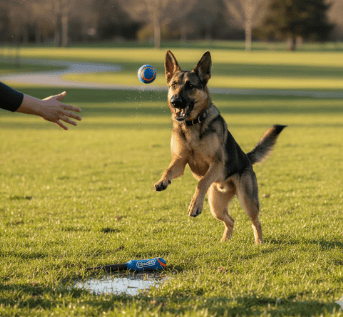
Fetch isn’t just exercise—it’s bonding time, training opportunity, and a way to burn off energy fast.
What Makes a Good Fetch Toy for GSDs
- Highly visible (bright colors)
- Easy to pick up (ergonomic shape)
- Durable (survives repeated throws and chomps)
- Safe for teeth (no hard plastic that cracks teeth)
1. ChuckIt! Ultra Ball
Why it’s better than tennis balls:
- Bounces higher and farther
- More durable rubber
- Bright orange and blue colors
- Compatible with ChuckIt! ball launchers
- Doesn’t wear down teeth like tennis balls
Best for: High-energy fetch sessions, long-distance throwing, dogs who love to chase
Sizes: Multiple sizes available—choose large for GSDs
Hazel’s Tip:
The ball launcher lets me throw 3X farther with less effort. Luna gets way more exercise, and my shoulder doesn’t hurt.
Price: $8-15 (balls), $15-30 (launcher)
2. West Paw Zogoflex Zisc (Flying Disc)
Why it’s indestructible:
Made from the same Zogoflex material as the Hurley—tough enough to survive power chewers but soft enough not to hurt their mouths.
Features:
- Floats for water play
- Guaranteed tough (West Paw replaces if destroyed)
- Bright colors for visibility
- Dishwasher safe
Best for: GSDs who love frisbee, beach or lake play, dogs learning disc sports
Important: Proper frisbee throwing takes practice. Start low and slow to build your dog’s confidence and catching skills.
Price: $15-20
3. Goughnuts Fetch Stick
Why it’s safer than real sticks:
Real sticks splinter, puncture mouths, and cause serious injuries. This indestructible stick alternative gives dogs the satisfaction of carrying a stick without the danger.
Features:
- Floats (great for water fetch)
- Same safety indicator as Goughnuts rings
- Multiple sizes
Best for: Dogs who love carrying and fetching sticks, water fetch, safety-conscious owners
Price: $20-30
4. KONG Flyer
Why it’s gentler:
Softer, more flexible material than the Zisc. Good for dogs learning to catch frisbees or those with sensitive mouths.
Best for: Beginners, older dogs, dogs with dental issues
Durability note: Not as indestructible as the Zisc, but still far more durable than cheap plastic discs.
Price: $10-15
What to Avoid in Fetch Toys
Regular tennis balls for daily use — Abrasive surface wears down tooth enamel over time; fine for occasional play but not daily chewing
Small balls — Choking hazard; always choose large balls for GSDs
Cheap plastic frisbees — Shatter and create sharp edges that cut mouths
Best Tug Toys for Strength and Bonding

Tug-of-war gets a bad reputation, but when played with rules, it’s one of the best activities for German Shepherds.
Why Tug Is Great for GSDs
Builds strength — Jaw, neck, and core muscles get a workout
Burns energy fast — 10 minutes of vigorous tug = 30 minutes of walking
Teaches impulse control — “Take it” and “drop it” commands during play
Strengthens bond — Interactive play builds trust and connection
Satisfies natural instincts — GSDs were bred to grip and hold
1. Mammoth Flossy Chews Rope
Why it’s classic:
100% cotton rope that’s virtually indestructible for tug play. The rope action also provides dental benefits by flossing between teeth.
Features:
- Multiple sizes (choose XL for GSDs)
- Machine washable
- Natural cotton (safe if small fibers are swallowed)
Best for: Classic tug-of-war, dogs who love rope texture, dental health
Safety note: Always supervise rope play. If the toy starts unraveling significantly, replace it—long strings can cause intestinal blockages.
Price: $10-25 depending on size
2. KONG Tug Toy
Why it’s better for humans:
Rubber grips on both ends make it comfortable for human hands during vigorous tugging. The middle section is durable rubber your dog can grip.
Features:
- Extremely durable
- Easy to clean
- Comfortable grip
- Multiple sizes
Best for: Dogs who tug hard, owners who want comfortable grip, all-weather play
Price: $15-25
3. West Paw Bumi
Why it’s unique:
Stretchy, flexible design that gives with your dog’s pulling motion. Gentler on joints than rigid tug toys.
Features:
- Floats (great for water tug)
- Zogoflex material (dishwasher safe)
- Stretches up to twice its length
- Bright colors
Best for: Senior dogs, dogs with joint issues, gentle tug play, water play
Price: $15-20
Tug Rules for Safe Play
1. You control when the game starts and stops — Don’t let your dog initiate by shoving the toy at you
2. Teach “drop it” before playing tug — The game stops immediately if they don’t drop on command
3. Never let the dog “win” by ripping the toy away — You decide when to release
4. No teeth on skin, ever — Even accidental contact means game over
5. Keep arousal moderate — If your dog gets too worked up (growling, overly intense), take breaks
When to avoid tug: If your dog shows any possessive aggression over toys, work with a trainer before playing tug.
Comfort & Anxiety Toys for Calming
Not all toys are for active play — some provide comfort and security.
1. Snuggle Puppy (Heartbeat Toy)
How it works:
Battery-powered device simulates a heartbeat. Some versions include microwaveable heat packs that mimic a mother’s warmth.
Why it helps:
The rhythmic heartbeat is calming, especially for puppies or anxious dogs. Mimics the comfort of being with another dog.
Best for:
- New puppies adjusting to their new home
- Dogs with separation anxiety
- Crate training
- Nighttime settling
- During thunderstorms or fireworks
Price: $30-40
2. KONG Cozies (Plush Comfort Toys)
What they are:
Soft, minimal-stuffing plush toys designed for gentle play and comfort.
Important note: These are NOT for aggressive chewers. They’re for dogs who enjoy carrying plush toys without destroying them.
Best for: Dogs who like soft toys, gentle play, companionship, carrying around the house
Comes in fun designs: Various animals, cute characters
Price: $8-15
3. Heartbeat Pillow
Similar to Snuggle Puppy but larger:
A pillow-sized version with heartbeat simulator.
Best for: Larger dogs, crate use, dogs who like to rest their head on something
Price: $25-35
When to Use Comfort Toys
- During crate time (provides companionship)
- Thunderstorms or fireworks (calming presence)
- When home alone (reduces anxiety)
- Nighttime settling (helps puppies sleep)
- After stressful events (vet visits, grooming)
Hazel’s Perspective:
Luna isn’t big on plush toys, but my friend’s GSD carries his Snuggle Puppy everywhere. Every dog is different—some need comfort toys, others don’t care.
DIY & Budget-Friendly Toy Options

Quality toys are worth the investment, but not everything needs to be expensive. Here are budget-friendly options that actually work.
1. Frozen Towel Toy
How to make it:
- Soak a rope or towel in water
- Tie it in knots
- Freeze solid
Why it works:
Great for teething puppies or hot summer days. The cold soothes gums, and the texture is satisfying to chew.
Cost: Free
2. Muffin Tin Puzzle
How to make it:
- Place treats in muffin cups
- Cover each cup with a tennis ball
- Let your dog figure out how to remove balls and get treats
Why it works:
Instant puzzle toy using items you already have. Adjustable difficulty — start with a few balls, increase to all 12.
Cost: Free (if you have muffin tin and tennis balls)
3. Cardboard Box Surprise
How to do it:
- Hide treats inside cardboard boxes
- Let your dog shred the box to find them
- Supervise to ensure they don’t eat cardboard
Why it works:
Satisfies natural shredding instinct in a controlled, safe way. Mental stimulation from problem-solving.
Cost: Free
Hazel’s Version:
I put smaller boxes inside larger boxes with treats hidden throughout. Luna loves the challenge of opening “presents.”
4. Plastic Bottle in a Sock
How to make it:
- Remove cap and label from empty plastic bottle
- Put bottle inside an old sock
- Tie the end closed
Why dogs love it:
The crinkly noise is irresistible to many dogs. The sock protects from sharp edges if the bottle cracks.
Important: ALWAYS supervise. Remove if your dog tries to eat plastic.
Cost: Free
Budget Shopping Tips
Thrift stores (Goodwill, etc.):
- Stuffed animals for gentle dogs (wash thoroughly first)
- Rope for DIY tug toys
Dollar stores:
- Plastic bottles for DIY toys
- Towels for frozen chew toys
Hardware stores:
- PVC pipe cut to length (stuff with treats for DIY puzzle)
- Rope by the foot (make custom tug toys)
Hazel’s Budget Hack:
Rotate toys weekly — put half away in a closet and bring out “new” old toys every week. It’s like Christmas for your GSD and costs nothing.
Toy Safety Guidelines
Safety always comes first. Follow these rules to keep your GSD safe during play.
Size Matters
Balls must be larger than your dog’s throat
Test: If it fits entirely in their mouth, it’s too small and becomes a choking hazard.
No small parts that can be swallowed
Eyes, noses, squeakers on plush toys can be pulled off and swallowed.
Choose “large” or “XL” sizes for adult GSDs
Don’t buy medium-sized toys even if your GSD is on the smaller side — better safe than sorry.
Supervision Rules
Always supervise with new toys
Watch how your dog interacts with a new toy for at least the first few sessions.
Check toys daily for damage
Before giving a toy to your dog, inspect for:
- Cracks or tears
- Pieces breaking off
- Sharp edges
- Excessive wear
Throw away broken toys immediately
Don’t wait — damaged toys are hazards.
Signs to Replace a Toy
- Rubber cracking or tearing
- Pieces breaking off
- Sharp edges exposed
- Significant wear that creates weak points
- Toy can now fit entirely in dog’s mouth (even if it couldn’t before)
Goughnuts safety indicator:
If you see red showing through black rubber, it’s time to replace (and they’ll replace it free under warranty).

Warning Signs During Play
Stop play immediately if you see:
- Swallowing large pieces of toy
- Choking or gagging
- Excessive drooling
- Pawing at mouth
- Strings wrapped around tongue
- Blood from mouth
If any of these occur:
Remove the toy, check your dog’s mouth, and contact your vet if you’re concerned.
Never Leave Unsupervised
These toys require supervision:
- Rope toys (can unravel and cause blockages)
- Any toy being actively destroyed
- Plush toys with stuffing
- DIY toys
Safe for unsupervised time:
- Kong Extreme (stuffed and frozen)
- Solid rubber chew toys (no breaking points)
- Nylon bones (properly sized)
Age-Appropriate Toy Recommendations
Different life stages need different toys.
Puppies (8 Weeks – 6 Months)
Focus: Teething relief, gentle play, building confidence
Best toys:
- Soft puppy Kongs (not Extreme — too hard for baby teeth)
- Frozen washcloths (teething relief)
- Soft rope toys
- Simple puzzles (Hide-A-Squirrel)
- Puppy-safe plush toys
- Snuggle Puppy for comfort
Avoid: Very hard toys that damage developing teeth, anything small enough to swallow
Adolescents (6 Months – 2 Years)
Focus: Energy burning, mental challenges, indestructible options
Best toys:
- Kong Extreme (upgrade from puppy Kong)
- Fetch toys (balls, frisbees)
- Intermediate puzzles
- Vigorous tug toys
- Benebones
- ChuckIt! balls
This is peak destruction age — invest in truly indestructible toys now
Adults (2-7 Years)
Focus: Maintaining engagement, physical fitness, mental sharpness
Best toys:
- Full range of challenging toys
- Advanced puzzles (Mad Scientist)
- Durable fetch and tug toys
- Antlers for long chew sessions
- Goughnuts for power chewers
Peak energy and intelligence — need variety and challenge
Seniors (7+ Years)
Focus: Joint-friendly options, mental stimulation, comfort
Best toys:
- Softer chew options (not rock-hard)
- Gentle tug toys (Bumi)
- Puzzles (keep mind sharp — very important!)
- Lower-impact fetch (shorter distances)
- Comfort toys
- Snuffle mats (great for seniors)
Adjust based on mobility:
If your senior has arthritis or hip dysplasia, choose toys that don’t require jumping or intense physical activity.
How Many Toys Does a German Shepherd Actually Need?
More isn’t always better. Too many toys can be overwhelming and reduce their value.
Recommended Toy Collection
Core collection (always available):
- 2-3 indestructible chew toys (Kong, Benebone, Goughnuts)
Rotation toys (5-6 out at a time, rotated weekly):
- 3-4 puzzle toys
- 2-3 fetch toys
- 1-2 tug toys
- 1-2 comfort toys (if your dog uses them)
Total: 10-15 toys
Rotation Strategy
Why rotate:
Toys that are always available become boring. Rotation makes old toys feel new again.
How to rotate:
- Keep 5-6 toys out for one week
- Put those away and bring out a different set
- Rotate every 7-10 days
- Keep chew toys available consistently
Wash toys regularly:
Once a week, throw rubber and fabric toys in the dishwasher or washing machine. Clean toys are more appealing.
Common Toy Mistakes German Shepherd Owners Make
Learn from my mistakes (and those of other GSD owners).
Mistake #1: Buying Toys That Are Too Small
Even if your GSD is smaller than average, always buy large or XL toys. Too many dogs have died from choking on balls that fit entirely in their mouths.
The fix: When in doubt, size up.
Mistake #2: Assuming “Indestructible” Means Unsupervised
Even the toughest toys can eventually break down. “Indestructible” means it’ll last longer, not that it’s 100% safe forever without supervision.
The fix: Check toys daily. Replace damaged toys immediately.
Mistake #3: Never Throwing Away Damaged Toys
“It’s mostly okay” or “There’s still some good parts” is dangerous thinking. A toy with one cracked section can fail catastrophically.
The fix: When a toy shows significant damage, throw it away. Your dog’s life is worth more than the cost of a replacement.
Mistake #4: Not Providing Mental Stimulation Toys
Physical exercise alone isn’t enough. A German Shepherd who runs for an hour but has no mental challenges will still be destructive.
The fix: Invest in puzzle toys. Use them regularly (at least 3-4 times per week).
Mistake #5: Giving Too Many Toys at Once
When your GSD has access to 20 toys simultaneously, none of them feel special. They’re just background clutter.
The fix: Rotate toys. Keep a few out at a time, and swap them regularly.
Mistake #6: Buying Based on Cute Factor Instead of Durability
That adorable plush toy with the squeaky face? It’ll be shredded in 30 seconds by a German Shepherd.
The fix: Buy based on function and durability, not appearance. Save cute toys for breeds that don’t destroy everything.
Mistake #7: Letting Your GSD Play with Kids’ Toys
Children’s toys aren’t designed for dog teeth and jaws. They often have small parts, toxic materials, or weak construction.
The fix: Keep kid toys and dog toys completely separate. Teach your GSD the difference.
Frequently Asked Questions
Are antlers safe for German Shepherds?
Split antlers are generally safe when used properly. Split antlers (cut in half lengthwise) are easier to chew and have less risk of tooth fractures than whole antlers.
Safety tips:
- Choose large, split antlers
- Supervise initially to ensure appropriate chewing (not aggressive chomping)
- Remove when worn down to a small nub
- Some vets worry about tooth fractures — know your dog’s chewing style
Not recommended for:
- Dogs who aggressively chomp (rather than gnaw)
- Dogs with existing dental issues
- Very young puppies with developing teeth
Bottom line: Many German Shepherds safely enjoy antlers for years. Start with split antlers, supervise, and watch for any signs of tooth damage. If you’re nervous, stick with rubber toys like Kong Extreme.
Final Thoughts
Investing in the right toys isn’t just about stopping destruction. It’s about giving your German Shepherd the mental challenge, exercise, and comfort they need to thrive.
Choosing the right mix of durable chews, puzzle toys, and fetch toys made a huge difference for my GSD, Luna. She became calmer, happier, and far less destructive because her energy finally had the right outlet.
Quality toys cost more upfront, but they save money long term. Cheap toys break fast, create safety risks, and lead to boredom-related damage. Good toys prevent all of that.
Every German Shepherd is different. Some love chew and puzzle toys. Others prefer comfort toys. Watch what your dog enjoys and build a toy collection around their personality.
The goal isn’t more toys—it’s the right toys. Ones that challenge the mind, satisfy strong jaws, burn energy, and keep your dog safe.
Looking for more ways to keep your GSD engaged?
Check out our 10 Proven Training Tips for German Shepherd Puppies—mental challenges through training are just as valuable as puzzle toys!
More German Shepherd Care Guides
- German Shepherd Exercise Requirements by Age — How much activity your GSD really needs
- Why Is My German Shepherd So Clingy? — Understanding behavior and building independence
- Best Food for German Shepherds — Nutrition for energy and health
Explore all our GSD resources →
Trusted Resources
- American Kennel Club — Canine Enrichment
- Dog Toys and How to Use Them – PAWS
- PETMD — Enrichment Toys for Dogs
What’s your German Shepherd’s all-time favorite toy? Has anything survived their jaws longer than expected? Share your recommendations in the comments—other GSD owners would love to know what actually works!