
By Hazel Sloane
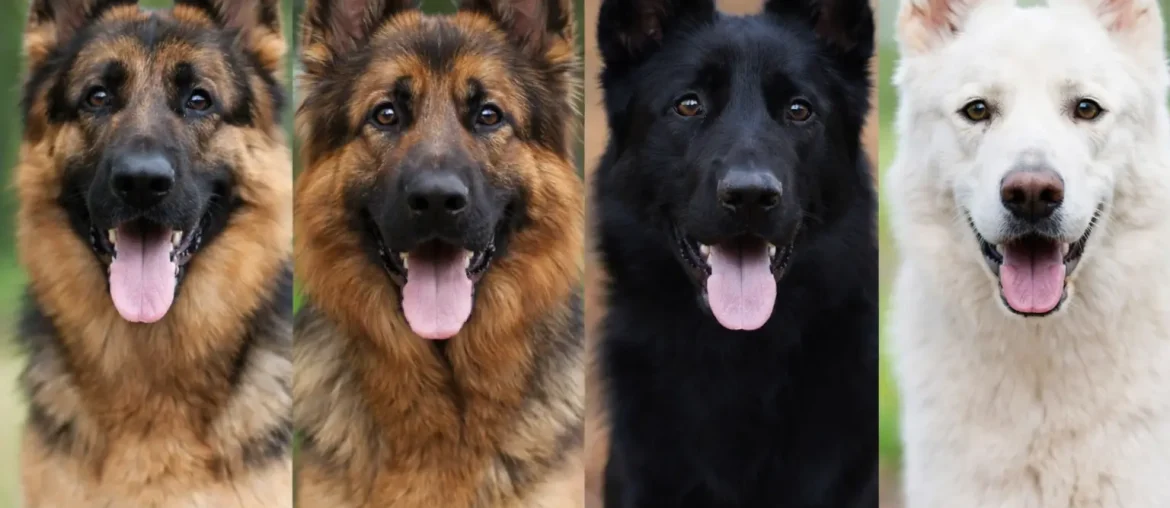
Discover all German Shepherd color variations from classic black and tan to rare white, blue, and panda GSDs. Learn which colors meet breed standards and how genetics determine coat color.
When I tell people that I have a German Shepherd, most picture the classic black and tan coloring the iconic look seen in police dogs and movies. But Luna is a rich sable color that shifts from light gold to dark charcoal depending on the light. People are often surprised to learn she’s a purebred German Shepherd.
Real truth is, German Shepherds come in a stunning variety of colors and patterns, each with its own unique beauty. Some are recognized by major kennel clubs, while others are considered rare or non-standard. Understanding these color variations helps you appreciate the diversity within this magnificent breed.
Whether you’re choosing a German Shepherd puppy, curious about color genetics, or simply fascinated by the range of GSD appearances, this complete guide covers all things you need to know about German Shepherd colors.
Standard German Shepherd Colors (AKC Recognized)
The American Kennel Club recognizes specific German Shepherd colors as meeting breed standards. These are the colors you’ll see in conformation shows and from reputable breeders focused on breed standards.
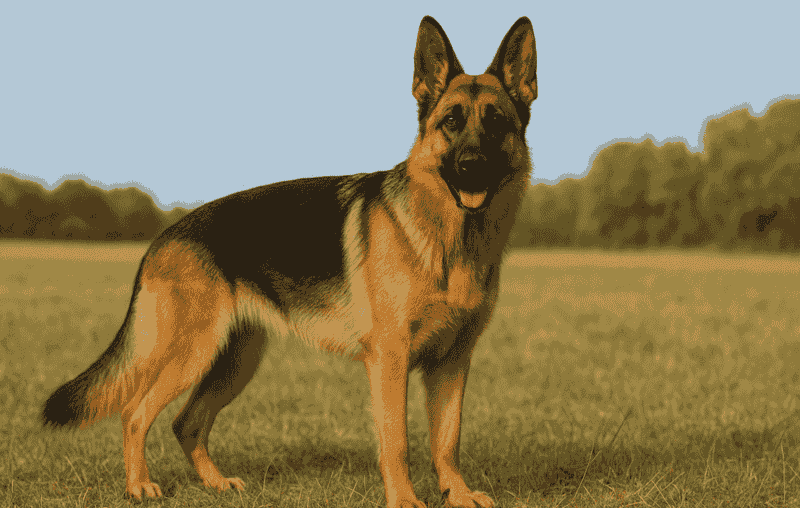
1. Black and Tan
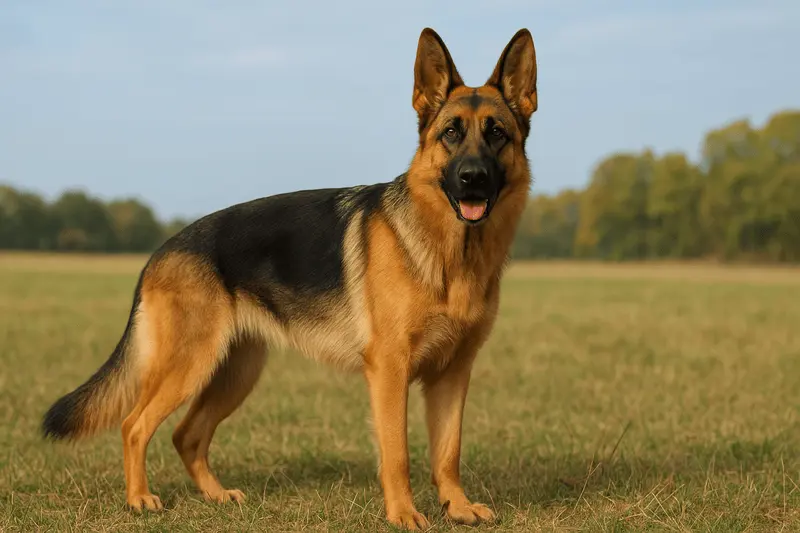
Most common and iconic GSD color
Appearance:
- Tan or cream body with black saddle marking across back
- Black face mask
- Black along the spine, tail, and legs
- Tan ranges from light cream to deep red
Pattern variations:
- Classic saddle pattern (black V-shape over back)
- Blanket pattern (more extensive black coverage)
Why it’s so common:
This coloring is genetically dominant, making it the most frequently seen pattern. It’s also the “traditional” GSD look that most people recognize instantly.
Hazel’s Note:
This is the color most people think of when they picture a German Shepherd. It’s stunning and timeless, though I’m admittedly biased toward my sable girl.
2. Black and Red
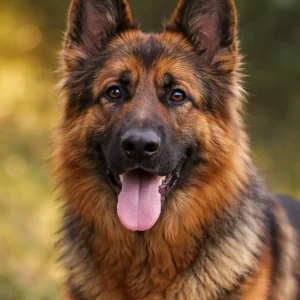
Richer, more vibrant version of black and tan
Appearance:
- Similar pattern to black and tan
- Tan areas are deeper red or mahogany instead of tan
- More saturated, intense coloring
- Black saddle or blanket pattern
Distinction from black and tan:
The red coloring is richer and more pigmented than standard tan. In sunlight, the red tones are especially striking.
Popularity:
Highly sought after by many breeders and owners who prefer the more dramatic coloring. Often seen in show lines and working lines.
3. Sable (Gray Sable/Agouti)
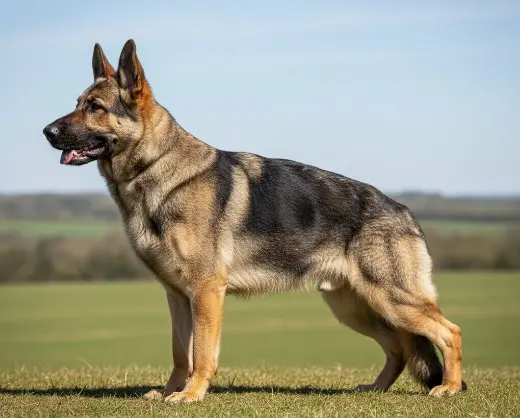
Wild-type coloring, closest to original German Shepherd appearance
Appearance:
- Each individual hair is banded with multiple colors (black, brown, gray, tan)
- Overall appearance ranges from light gray to dark charcoal
- Can appear to change color in different lighting
- No distinct pattern like saddle markings
- More “wolfish” appearance
Color variations within sable:
- Light sable (more tan/gold)
- Dark sable (more black/charcoal)
- Gray sable (silvery tones)
Genetics:
Sable is actually the dominant color gene in German Shepherds, though black and tan appears more common due to selective breeding preferences.
Why I love it:
Luna’s sable coat is like a living painting. In bright sunlight, she looks golden. In shade, she appears almost charcoal. The multi-toned banding on each hair creates incredible depth and richness.
4. Solid Black
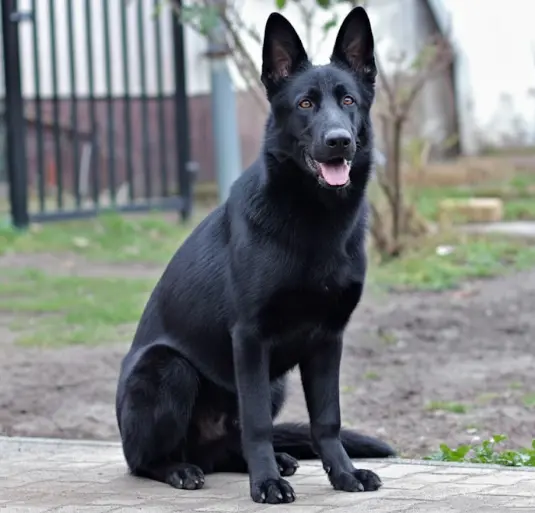
Striking, entirely black German Shepherds
Appearance:
- Completely black from nose to tail
- No tan, brown, or other color markings
- May have small white chest spot (still considered solid black)
- Coat can be shiny or matte
Rarity:
Less common than black and tan but not rare. Requires both parents to carry the recessive black gene.
Misconceptions:
Solid black GSDs are NOT a different breed. They’re purebred German Shepherds with recessive color genetics.
Temperament myth:
Black GSDs have the same temperament as any other color. Color doesn’t affect personality, drive, or trainability.
Show eligibility:
Fully recognized by AKC and allowed in conformation shows.
5. Bicolor
Mostly black with minimal tan markings
Appearance:
- Predominantly black coat (80-90% black)
- Small tan markings on legs, feet, face, or under tail
- Less tan than black and tan pattern
- Often mistaken for solid black from a distance
Difference from black and tan:
Bicolor has much less tan—just accent points rather than full body tan.
Genetics:
Result of genes that restrict the tan/red pigment to minimal areas.
Popularity:
Loved for the dramatic, mostly-black appearance while still showing the classic GSD tan points.
Non-Standard German Shepherd Colors
These colors occur naturally in German Shepherds but are not recognized by the AKC breed standard. Dogs with these colors cannot compete in conformation shows, though they can participate in obedience, agility, and other performance events.
6. White German Shepherd
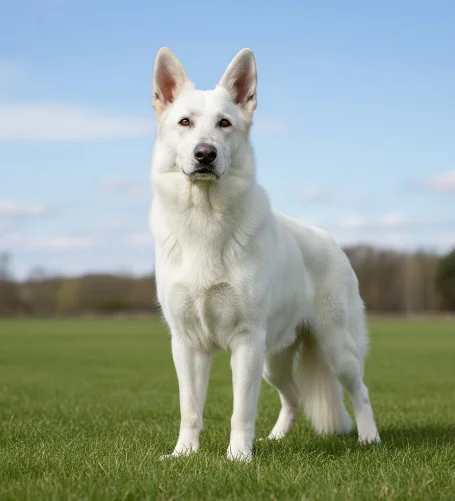
Controversial but beautiful solid white coat
Appearance:
- Pure white coat from head to tail
- Dark eyes and nose (not albino)
- Pink or dark paw pads
- Same structure and build as standard GSDs
Important distinction:
White GSDs are NOT albino. They have normal pigmentation in eyes and nose. The white coat is caused by a recessive gene that masks other colors.
Breed recognition:
- Not recognized by AKC for conformation
- Recognized as separate breed by United Kennel Club (called “White Shepherd”)
- Controversial in GSD community
Health:
No health issues associated with white coat color. They’re as healthy as any other GSD color.
Temperament:
Identical to other German Shepherds. Color doesn’t affect personality or working ability.
Why the controversy:
Some believe white dogs should be removed from breeding programs to preserve traditional GSD appearance. Others argue white is a natural color variation that shouldn’t be discriminated against.
7. Blue German Shepherd
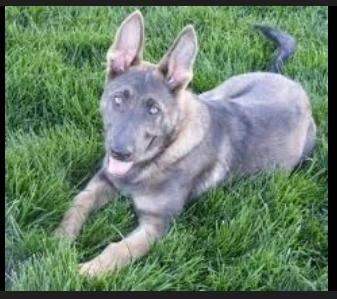
Diluted black coloring creating blue-gray appearance
Appearance:
- Blue-gray or steel-gray coat
- Can have blue and tan pattern (similar to black and tan)
- Grayish nose and paw pads
- Lighter, sometimes amber-colored eyes
Genetics:
Blue is a dilution gene acting on black pigment. It’s recessive, requiring both parents to carry the gene.
Health concerns:
Blue dogs can be prone to Color Dilution Alopecia (CDA), a condition causing hair loss and skin issues. Not all blue dogs develop it, but it’s a risk.
Breed standard:
Not recognized by AKC. Considered a fault in conformation showing.
Rarity:
Relatively rare. Some breeders specifically breed for blue, while others avoid it due to health concerns.
8. Liver (Brown) German Shepherd
Brown instead of black pigment
Appearance:
- Brown coat where black would normally be
- Can be liver and tan (brown saddle with tan body)
- Light brown, amber, or green eyes
- Brown nose and paw pads
Genetics:
Recessive gene that changes black pigment to brown. Both parents must carry the gene.
Breed standard:
Not recognized by AKC. Very rare in German Shepherds.
Health:
No specific health issues associated with liver coloring.
9. Panda German Shepherd
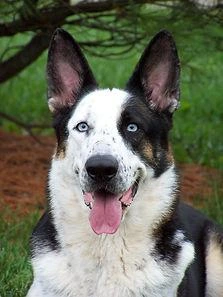
Extremely rare piebald pattern
Appearance:
- Classic German Shepherd coloring (black and tan) with white spotting
- White chest, paws, face markings, or belly
- Symmetrical or asymmetrical white patches
- Looks like a GSD with “paint splashes”
Origin:
First documented in 2000 from a spontaneous mutation. All panda GSDs trace back to a single dog named “Lewcinka’s Franka von Phenom.”
Genetics:
Caused by KIT gene mutation affecting pigment distribution. Extremely rare—requires specific genetic inheritance.
Breed standard:
Not recognized by AKC. Cannot be shown in conformation.
Rarity:
One of the rarest GSD color variations. Panda GSDs are highly unusual and often expensive.
Health:
No health issues specifically linked to panda coloring.
How German Shepherd Color Genetics Work
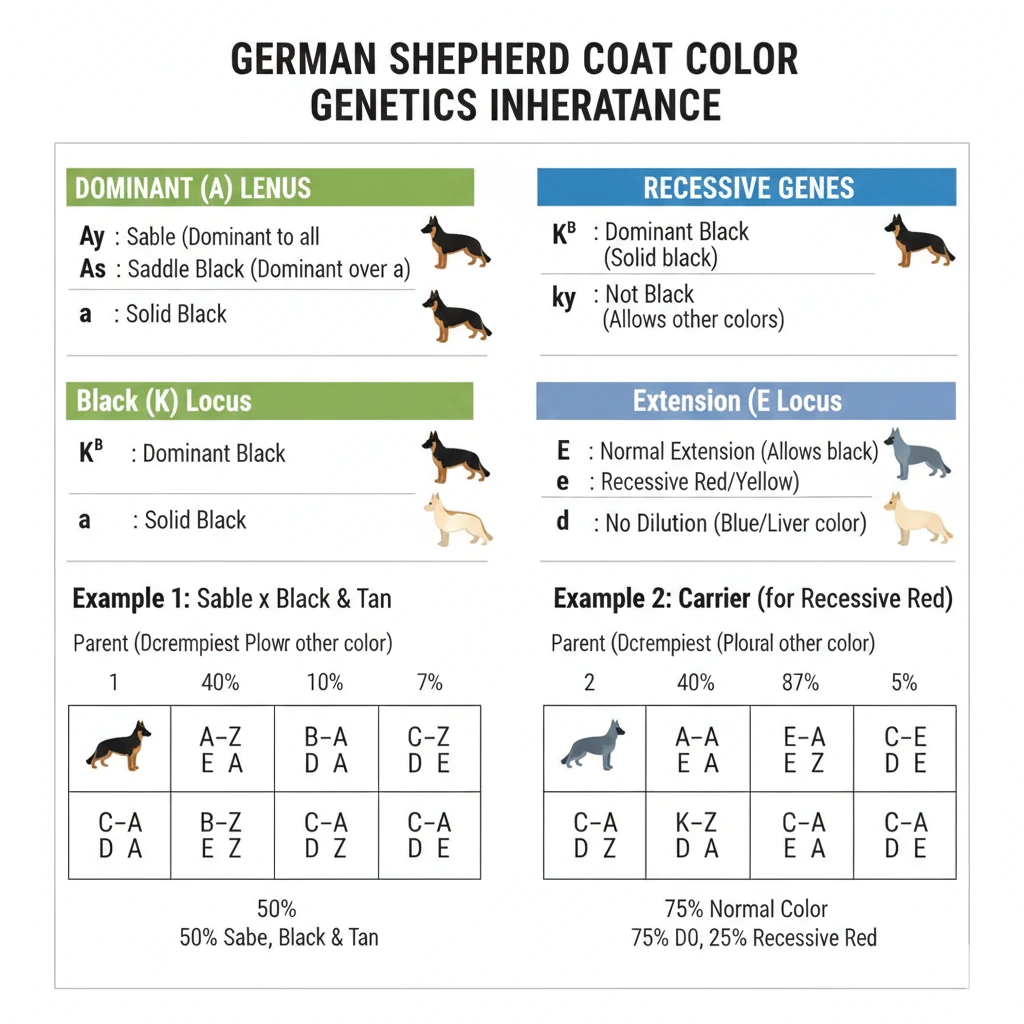
Understanding basic color genetics helps explain why certain colors appear and how breeders can predict puppy colors.
Dominant vs. Recessive Genes
Dominant genes (show up even if only one parent carries them):
- Sable (most dominant)
- Black and tan
Recessive genes (require both parents to carry the gene):
- Solid black
- Blue
- Liver
- White
Color Inheritance Simplified
Two black and tan parents:
Can produce black and tan, sable (if carrying sable gene), or solid black (if both carry recessive black)
Two sable parents:
Typically produce sable puppies, but can produce black and tan if both carry that gene
Two solid black parents:
Will only produce solid black puppies
Predicting puppy colors:
Requires knowing the parents’ genetic makeup, not just their appearance. A black and tan dog might carry genes for sable, black, or even blue without showing those colors.
Color Changes: Puppy to Adult
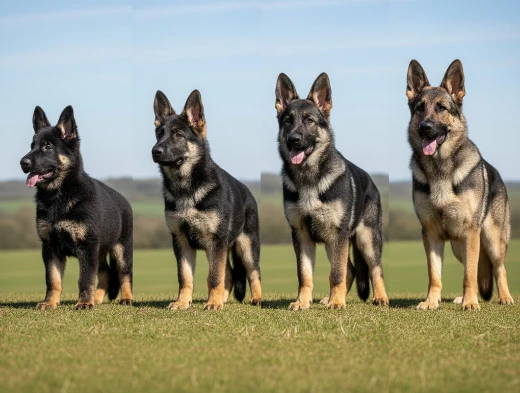
German Shepherd puppies often change color dramatically as they mature.
Common Color Changes
Black puppies:
- May develop tan points as they grow (becoming bicolor or black and tan)
- Solid black puppies usually stay black
Sable puppies:
- Born darker, often appearing almost black
- Lighten significantly as adult coat grows in
- Final adult color not evident until 2-3 years old
Black and tan puppies:
- Tan areas may darken or lighten
- Black saddle may expand (blanket pattern) or stay defined
White puppies:
- Born white, stay white
- May appear cream as puppies, pure white as adults
When Final Color Appears
Most GSDs: Final adult coloring evident by 2-3 years old
Sables: Can continue darkening or lightening throughout life
Black and tan: Relatively stable, though tan intensity may shift
Hazel’s Experience:
Luna was nearly black as a puppy. I thought I had a solid black GSD. As her adult coat came in around 6-8 months, the sable pattern emerged. She continued lightening until about age 2, when her final rich sable color stabilized.
Does Color Affect Health or Temperament?
This is one of the most common questions about GSD colors.
Health Considerations
Most colors: No health impact
Blue GSDs: Risk of Color Dilution Alopecia (hair loss, skin issues)
White GSDs: No health issues despite myths
Other colors: No color-related health concerns
Important: Hip dysplasia, digestive issues, and other common GSD health problems are unrelated to coat color. Genetics, breeding practices, and care matter far more than color.
Temperament and Color
No scientific evidence links coat color to temperament in German Shepherds.
Temperament determined by:
- Genetics (parents’ temperament)
- Socialization
- Training
- Individual personality
- Breeding line (working vs. show)
Color does NOT determine:
- Intelligence
- Trainability
- Aggression levels
- Loyalty
- Working ability
Myths debunked:
- White GSDs are NOT more timid (false)
- Black GSDs are NOT more aggressive (false)
- Sable GSDs are NOT more “wolfish” in temperament (false)
Choosing a German Shepherd by Color
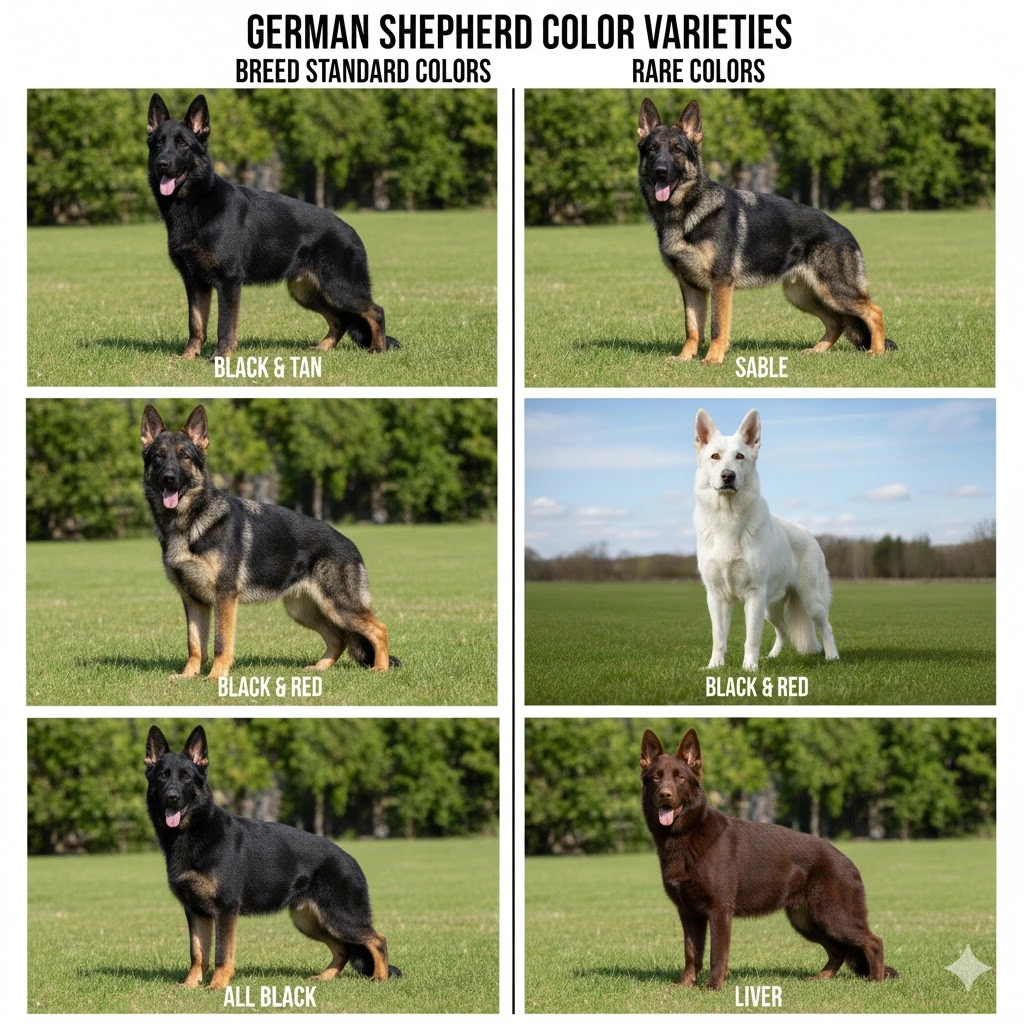
If you’re selecting a GSD puppy, should color influence your decision?
When Color Matters
Personal preference:
If you have a strong aesthetic preference, that’s valid. You’ll live with your GSD for 10-12 years loving their appearance enhances your bond.
Show competition:
If you plan to show in conformation, stick to AKC-recognized colors (black and tan, black and red, sable, solid black, bicolor).
Breed preservation:
If breeding, follow breed standard guidelines and work with reputable mentors.
When Color Shouldn’t Matter
Health: Choose healthy parents and good genetics over color
Temperament: Select for temperament, not appearance
Working ability: If you need a working dog, ability trumps color
Overall quality: Structure, health testing, and breeder reputation matter more
Red Flags in Color-Based Breeding
Avoid breeders who:
- Breed specifically for rare colors (blue, liver, panda) without health testing
- Charge significantly more for “rare” colors
- Focus on color over health, temperament, and structure
- Make health claims based on color (“blue GSDs are healthier”)
- Breed white GSDs specifically to avoid conformation standards
Reputable breeders:
- Health test all breeding dogs
- Breed for temperament and structure first
- Produce various colors as natural genetic variation
- Price puppies based on quality, not color
- Follow breed standards
Color and the Breed Standard
Understanding what the AKC breed standard says about color helps explain why some colors are controversial.
AKC German Shepherd Breed Standard on Color
Acceptable colors:
- Black and tan
- Black and red
- Sable
- Solid black
- Bicolor
Serious faults:
- White (disqualification from conformation)
- Blue
- Liver
Pale, washed-out colors:
Considered undesirable but not disqualifying
Why Standards Matter
Breed standards preserve the German Shepherd’s original purpose, structure, and appearance. While some argue standards are too restrictive, they help maintain breed identity and consistency.
Performance vs. conformation:
A white, blue, or liver GSD can excel in obedience, agility, search and rescue, and be an amazing family dog—they just can’t compete in conformation shows.
Rare Color Pricing
Be aware of pricing tactics around rare colors.
What’s Fair
Normal variation:
Reputable breeders may charge similar prices for all colors or slightly more for less common colors like solid black or sable (due to supply and demand).
Price range:
$1,500-$3,500 from reputable breeders, regardless of color
Red Flags
Overpriced rare colors:
$5,000+ for blue, panda, or liver GSDs is often a red flag. High price doesn’t guarantee quality.
“Designer” marketing:
Terms like “rare blue,” “exotic panda,” or “premium white” often signal profit-driven breeding rather than breed preservation.
No health testing:
If a breeder charges premium prices but doesn’t health test (hips, elbows, genetics), walk away.
Caring for Different Coat Colors
All German Shepherd colors require similar care, with minor considerations.
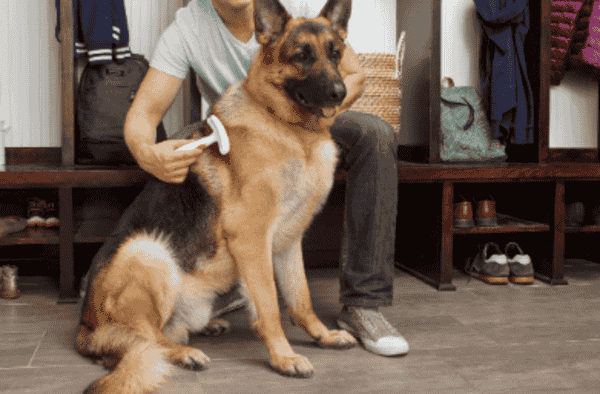
General Coat Care (All Colors)
- Brush 2-3 times weekly (daily during shedding season)
- Bathe every 6-8 weeks or as needed
- Use quality dog shampoo
- Regular grooming maintains coat health
White GSDs
Special considerations:
- Stains show more easily (tear stains, dirt)
- May need more frequent bathing
- Use whitening shampoo if desired (not necessary)
Myth: White coats don’t require special care beyond normal grooming
Dark Colors (Black, Dark Sable)
Sun exposure:
Dark coats can fade slightly in intense sun. Provide shade during peak hours.
Heat absorption:
Dark coats absorb more heat. Monitor for overheating in summer.
Final Thoughts
German Shepherd colors are wonderfully diverse, from the classic black and tan to striking solid black, rich sables, and rare whites. Each color has its own unique beauty and charm.
Luna’s sable coat taught me that the “traditional” GSD look is just one expression of this incredible breed. Her color shifts with the seasons and light, creating an ever-changing appearance that I never tire of.
If you’re choosing a German Shepherd, let color be a factor in your decision if it matters to you but its not the primary factor. Health, temperament, structure, and the breeder’s reputation should always come first. A well-bred, healthy, confident German Shepherd is beautiful regardless of color.
The best German Shepherd color is the one attached to a dog you’ll love for their entire life. Whether they’re black and tan, sable, white, or any variation in between, what matters is the bond you build and the life you share together.
💡 Choosing a German Shepherd puppy?
Learn about temperament, size differences, and what to look for in our complete breed selection guide.
More German Shepherd Breed Guides
- German Shepherd Size Guide: Weight & Height by Age — Growth charts and size expectations
- Male vs. Female German Shepherds: Which to Choose? — Temperament and size differences
- Are German Shepherds Good Family Dogs? — Suitability and temperament guide
Explore all GSD breed facts →
Trusted Resources
- American Kennel Club — German Shepherd Breed Standard
- German Shepherd Dog Club of America — Colors
- Canine Genetics — Coat Color Inheritance
Keywords: German Shepherd colors, GSD coat colors, black and tan German Shepherd, sable German Shepherd, white German Shepherd, German Shepherd color genetics
💬 What color is your German Shepherd? Share a photo in the comments—we’d love to see the beautiful variety of GSD colors in our community!