
Few dog breeds capture hearts quite like the German Shepherd. Intelligent, loyal, and deeply devoted, this breed has become a symbol of courage and companionship around the world.
Whether you’ve just brought home a GSD puppy or are thinking about adopting one, understanding what makes this breed so special is the first step to a happy, lifelong bond.
Let’s dive into the complete German Shepherd breed profile the truth about their temperament, training needs, and what new owners can expect from life with this incredible companion.
A Quick History of the German Shepherd
The German Shepherd story begins in the late 1800s with Captain Max von Stephanitz, a German cavalry officer who wanted to create the perfect working dog intelligent, loyal, and strong. He succeeded beyond imagination.
Originally bred for herding and guarding flocks, the German Shepherd quickly proved itself as a multitasker: a police partner, war hero, search-and-rescue dog, and family protector.
From Rin Tin Tin’s movie fame to K9 service around the world, the GSD has earned its reputation as one of the most versatile and admired breeds ever created.
German Shepherd Appearance & Physical Traits
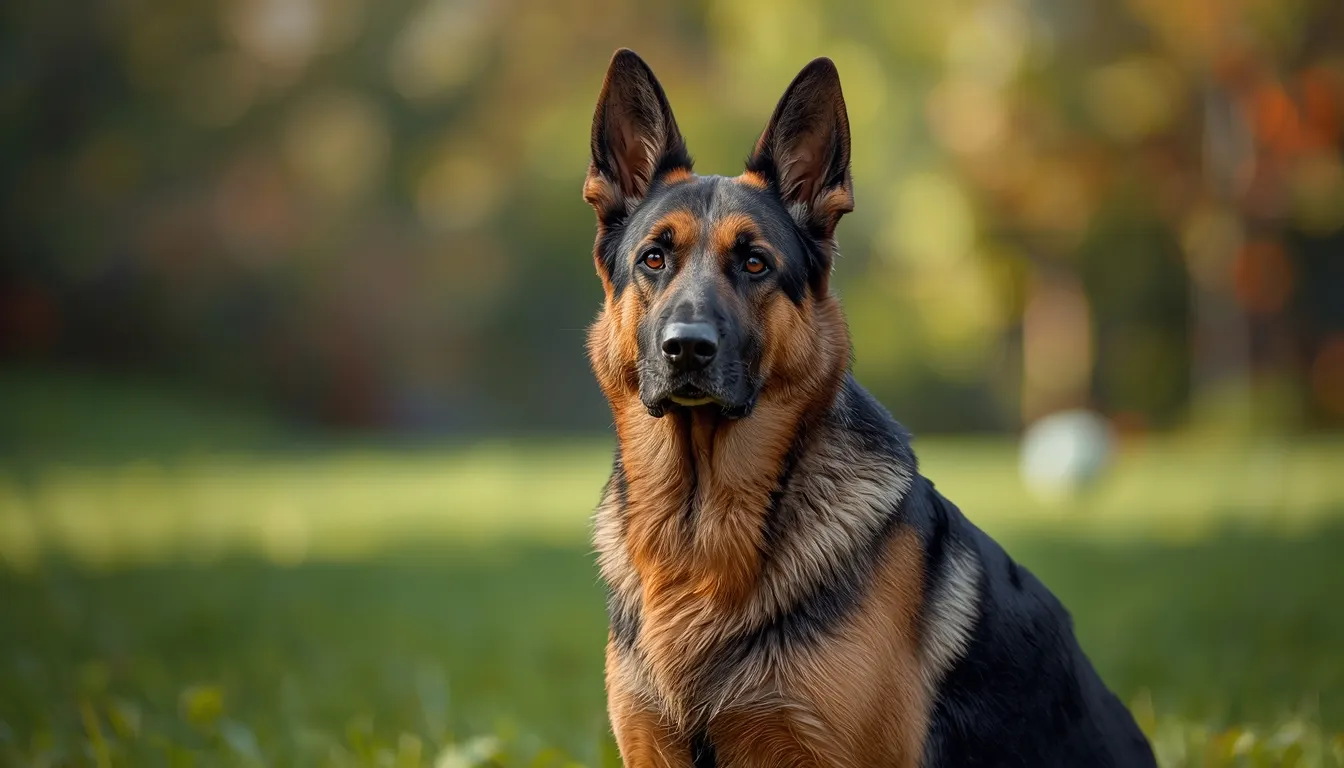
German Shepherds are the picture of strength and grace. They have a medium-to-large build, powerful muscles, and a noble stance that exudes confidence.
Key Physical Traits:
- Height: 22–26 inches
- Weight: 50–90 pounds (varies by gender and build)
- Coat: Double-layered (dense undercoat + weather-resistant outer coat)
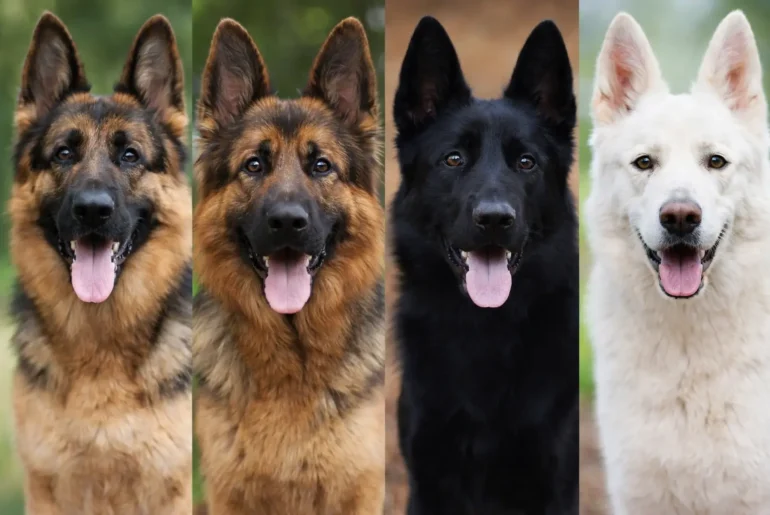
- Colors: Black and tan (most common), sable, all-black, and sometimes white
Their erect ears, deep chest, and alert eyes make them instantly recognizable. Every inch of a GSD says, “I’m ready to work and protect the ones I love.”

Temperament — What Makes GSDs So Special
Loyal. Confident. Intelligent. That’s the German Shepherd in three words.
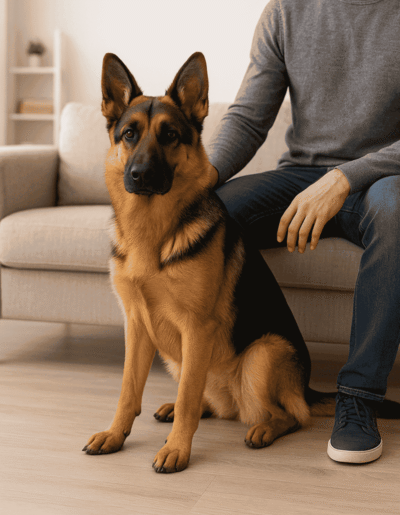
This breed thrives on connection and purpose. They bond deeply with their family, often choosing one person as their “favorite human.” Yet, they’re equally loving and protective of children, making them one of the best all-around family dogs when properly trained.
Temperament Highlights:
- Loyal & protective – Always watching over their home and people.
- Highly intelligent – Ranked among the top 3 smartest dog breeds.
- Trainable & eager to please – They live to make you proud.
- Reserved but gentle – Naturally cautious with strangers, affectionate with family.
Hazel’s insight : “German Shepherds don’t just listen; they understand. That’s what makes training feel like teamwork, not obedience.”
Training & Mental Stimulation
Owning a GSD means embracing their brilliance. They’re fast learners, but they need direction and mental engagement to stay balanced.
Start with early socialization. Introduce your puppy to people, dogs, and new experiences. Pair this with positive reinforcement training. Harsh methods don’t work with GSDs; encouragement does.
Top mental workouts for GSDs:
- Obedience and agility training
- Nose work and scent games
- Puzzle toys and hide-and-seek
- Trick training and daily command refreshers
Remember: a tired GSD is a happy GSD. Mental stimulation is just as important as physical exercise.
Exercise & Activity Needs
If you’re not an active person, a German Shepherd might just make you one.
These dogs were built for work they need movement to stay healthy and happy.
Activity Guidelines:
- 1–2 hours of exercise daily
- Mix of walks, running, and playtime
- Perfect outdoor companions for hiking, jogging, or fetch
- Ideal for obedience, agility, and tracking competitions
Without enough exercise, a GSD may become restless or develop destructive habits. Give them a job to do even if it’s “guarding the backyard.”
Grooming & Shedding Reality
Here’s the truth every GSD owner learns fast: they shed… a lot.
Nicknamed “the German Shedder,” this breed blows its undercoat twice a year (spring and fall). But with regular grooming, it’s completely manageable.
Grooming Tips:
- Brush 2–3 times a week (daily during shedding seasons)
- Bathe every 6–8 weeks not too often (read our bathing guide here)
- Use a deshedding brush or grooming rake
- Trim nails, clean ears, and brush teeth regularly
- Hazel’s Pro Tip: Brushing before a bath helps loosen dead hair for easier cleanup.
Health Overview
Like all breeds, German Shepherds have their health considerations.
Common issues include hip and elbow dysplasia, degenerative myelopathy, and allergies.
A responsible diet, regular vet checkups, and joint supplements can help your GSD stay strong and agile for years.
Average Lifespan: 9–13 years
Healthy Habits:
- Balanced diet rich in protein and omega-3s
- Regular vet visits and yearly bloodwork
- Controlled exercise (especially for growing puppies)
Why German Shepherds Make Amazing Family Dogs
Despite their working-dog image, GSDs are big softies at heart.
They’re deeply attached to their humans and protective without being aggressive when trained well.
Why families love them:
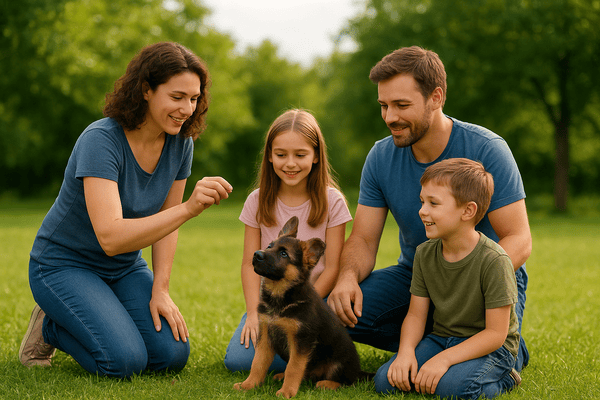
- Excellent with kids gentle yet watchful
- Loyal and devoted companions
- Naturally protective but obedient
- Emotionally intelligent and intuitive
“When a German Shepherd loves you, they love you for life. There’s no halfway with them.”
Is a German Shepherd Right for You?
Before you bring a GSD home, ask yourself:
- Can I commit to daily exercise and training?
- Do I have space for a large, active dog?
- Am I ready to handle shedding and regular grooming?
If your answer is yes, congratulations! You’re ready for one of the most rewarding bonds in the dog world.
German Shepherds aren’t just pets; they’re partners, protectors, and best friends rolled into one.
Conclusion
The German Shepherd is a breed like no other: brave , brilliant, and endlessly loyal. They’ll challenge you, protect you, and stand by your side through everything.
Give them structure, training, and love, and they’ll give you their whole heart in return.
Thinking of getting a GSD? Welcome to the family and to the Shepzy pack.